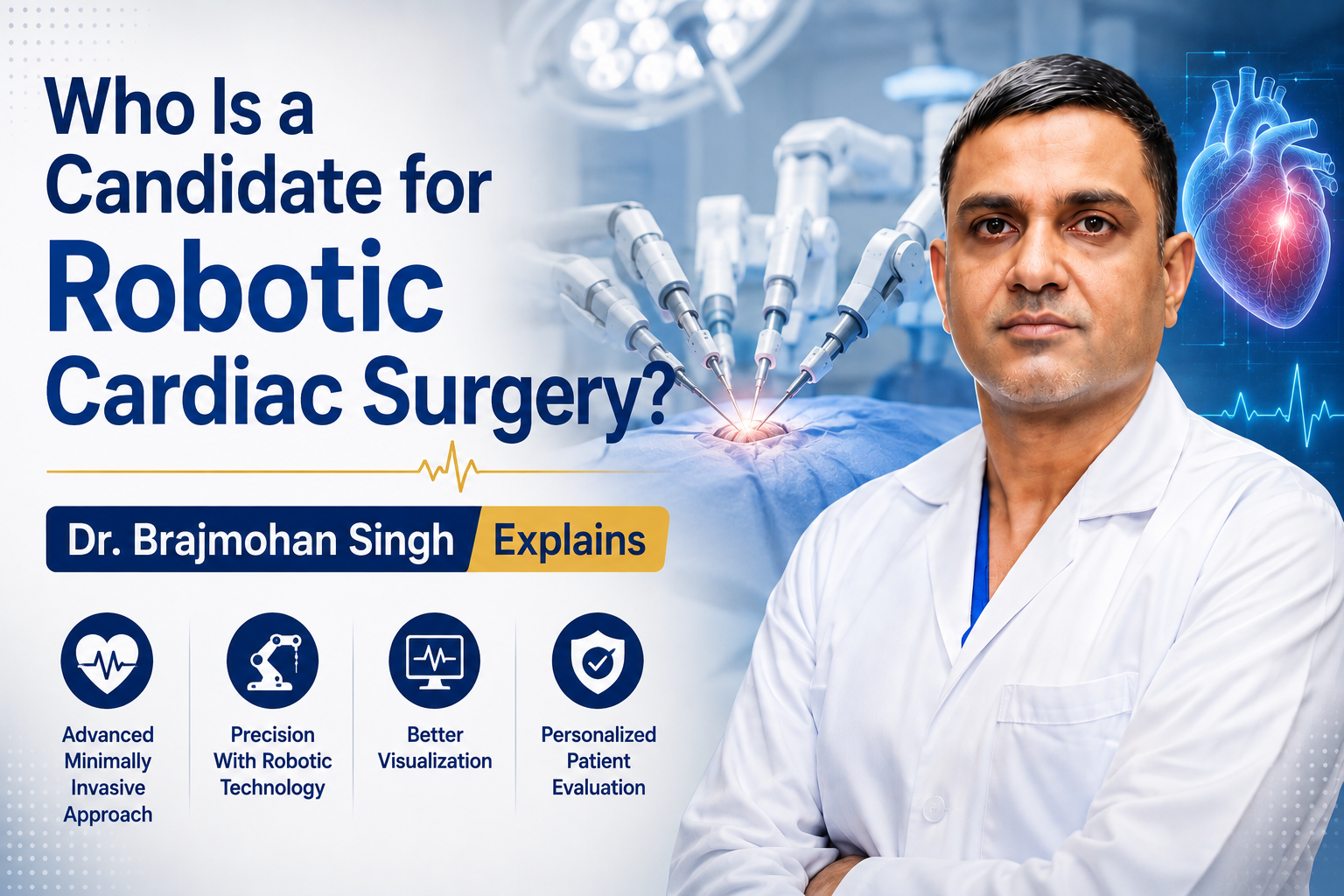
Surgery?
Several factors may be considered before recommending robotic cardiac surgery.
1. The Type of Heart Condition
The first consideration is the patient’s diagnosis.
Robotic techniques may be used for selected procedures involving conditions such as certain coronary artery disease or valve-related conditions.
However, the exact suitability depends on the individual patient’s anatomy and the procedure required.
A robotic approach may be appropriate for one patient but not another patient with a similar diagnosis.
2. Heart and Coronary Anatomy
The structure of the heart and blood vessels plays an important role in determining whether robotic surgery is technically appropriate.
For patients being evaluated for coronary procedures, the surgical team may consider:
- Location of coronary blockages
- Number of affected vessels
- Condition of the coronary arteries
- Heart function
- Accessibility of the target area
Detailed imaging and cardiac investigations help the surgical team understand the patient’s anatomy before deciding on the surgical approach.
3. Overall Health
A patient’s general health is another important consideration.
The surgical team may evaluate:
- Heart function
- Lung function
- Kidney function
- Diabetes and other medical conditions
- Previous medical history
- Physical fitness
- Medication history
Good overall health may support recovery, but the final decision depends on the complete clinical picture.
4. Previous Heart or Chest Surgery
Previous surgery can affect whether a minimally invasive or robotic approach is appropriate.
Scar tissue, previous operations and changes in the anatomy may influence the surgical plan.
Patients who have undergone previous cardiac or chest procedures should provide their complete surgical history to the cardiac team.
5. Age and Physical Condition
Age alone does not necessarily determine whether someone can undergo robotic cardiac surgery.
A patient’s:
- Overall physical condition
- Heart function
- Lung function
- Other medical conditions
- Ability to recover after surgery
may be more important considerations.
An older patient may potentially be considered for a minimally invasive approach if the surgical team determines that it is appropriate. However, this decision must be individualized.
Can Elderly Patients Undergo Robotic Cardiac Surgery?
In some cases, elderly patients may be considered for minimally invasive or robotic cardiac procedures.
However, age should not be considered in isolation.
Doctors may evaluate the patient’s overall health, frailty, heart function, lung function, kidney function and other medical conditions before recommending a surgical approach.
The safest procedure is the one that is appropriate for the patient’s individual medical circumstances.
Can Diabetic Patients Have Robotic Cardiac Surgery?
Having diabetes does not automatically mean that a patient cannot undergo robotic cardiac surgery.
However, diabetes can influence surgical planning and recovery.
The medical team may consider:
- Blood glucose control
- Kidney function
- Cardiovascular health
- Risk of infection
- Other diabetes-related health conditions
Patients with diabetes should provide their complete medical history and current medication information during their surgical evaluation.
Can Patients With Coronary Artery Disease Be Candidates?
Some patients with coronary artery disease may be considered for minimally invasive or robotic coronary procedures.
However, coronary artery disease varies significantly from patient to patient.
The cardiac team may evaluate:
- Number of blocked arteries
- Location of blockages
- Severity of disease
- Quality of the coronary arteries
- Heart function
- Previous cardiac procedures
- Other health conditions
For selected patients, a robotic approach may be considered. Other patients may benefit from a different form of bypass or cardiac treatment.
Is Robotic CABG Suitable for Everyone?
No.
Robotic CABG, or robotic coronary artery bypass grafting, is an advanced approach that may be considered for selected patients with coronary artery disease.
The suitability of robotic CABG depends on the patient’s coronary anatomy and the specific bypass procedure required.
Factors that may influence the decision include:
- Location of coronary blockages
- Number of vessels involved
- Coronary artery anatomy
- Previous cardiac surgery
- Heart function
- Overall health
- Surgical complexity
A detailed assessment is essential before deciding whether robotic CABG is appropriate.
Who May Not Be a Candidate for Robotic Cardiac Surgery?
Some patients may require a conventional or different surgical approach instead of robotic surgery.
Potential reasons may include:
- Complex coronary anatomy
- A cardiac condition that is not suitable for robotic treatment
- Extensive previous surgery
- Certain anatomical limitations
- Significant medical conditions
- A procedure requiring a different surgical approach
- Lack of suitability based on the surgeon’s assessment
This does not mean that surgery cannot be performed.
It simply means that another surgical technique may be more appropriate for that particular patient.
What Tests Are Done Before Robotic Cardiac Surgery?
Before recommending robotic cardiac surgery, doctors may perform several investigations to understand the patient’s condition.
Depending on the diagnosis, these may include:
Echocardiogram
An echocardiogram provides information about heart structure and function.
ECG
An electrocardiogram records the electrical activity of the heart.
Coronary Angiography
For patients with suspected or known coronary artery disease, coronary angiography can help identify the location and severity of blockages.
CT or Other Imaging
Additional imaging may be recommended when the surgical team needs more information about the patient’s anatomy.
Blood Tests
Blood tests may be performed to assess general health and identify factors that could affect surgery or recovery.
The exact tests required depend on the patient’s condition.
Why Is Individual Assessment So Important?
Two patients can have the same diagnosis but require different treatment approaches.
For example, two patients may both have coronary artery disease, but their:
- Coronary anatomy
- Number of blockages
- Heart function
- Medical history
- Previous procedures
- Overall health
may be completely different.
As a result, one patient may be considered for robotic or minimally invasive surgery, while another may require conventional surgery.
The technology should follow the patient’s medical needs, not the other way around.
Robotic Cardiac Surgery vs Conventional Heart Surgery
Patients sometimes assume that robotic surgery is automatically better than conventional surgery.
That is not necessarily the case.
Robotic cardiac surgery can offer the advantages of a minimally invasive approach for appropriately selected patients. Conventional surgery may be more suitable for patients with complex conditions or anatomy.
The decision may depend on:
| Factor | Robotic Approach | Conventional Approach |
| Surgical access | Smaller access points in selected procedures | May involve a larger incision |
| Visualization | High-definition camera | Direct surgical visualization |
| Instruments | Surgeon-controlled robotic instruments | Conventional surgical instruments |
| Patient selection | Selected patients | Can be suitable for many complex procedures |
| Recovery | May be quicker for some patients | Depends on the procedure and individual recovery |
| Suitability | Depends strongly on anatomy and procedure | Depends on diagnosis and surgical requirements |
The objective should always be safe and effective treatment for the individual patient.
What Are the Benefits of Robotic Cardiac Surgery for Suitable Patients?
For appropriately selected patients, robotic cardiac surgery may provide several potential advantages.
These can include:
Smaller surgical access
Robotic procedures generally use smaller access points than many conventional open approaches.
Detailed visualization
The camera can provide an enlarged view of the surgical field.
Precise instrument control
The surgeon controls specialized instruments designed for precise movements within the surgical area.
Potentially less surgical trauma
A minimally invasive approach may reduce disruption to surrounding tissues in selected procedures.
Potentially faster recovery
Some appropriately selected patients may recover sooner than they would after certain conventional procedures.
However, the benefits vary between patients and procedures.
What Should Patients Ask Before Choosing Robotic Cardiac Surgery?
If your doctor has discussed robotic cardiac surgery with you, consider asking:
- Am I a suitable candidate for robotic surgery?
- What type of procedure do I need?
- Why is robotic surgery being recommended?
- What are the potential benefits for my condition?
- What are the possible risks?
- Are there alternative surgical approaches?
- What tests do I need before surgery?
- What will my recovery involve?
- How experienced is the surgical team with this procedure?
- What follow-up care will I need?
These questions can help you understand why a particular surgical approach has been recommended.
Robotic Cardiac Surgery in Ahmedabad
Patients searching for robotic cardiac surgery in Ahmedabad should consider more than the availability of robotic technology.
Important factors include:
- The cardiac surgeon’s qualifications
- Experience with the specific procedure
- Appropriate hospital infrastructure
- Cardiac anesthesia support
- Intensive care facilities
- Postoperative monitoring
- Follow-up care
- Whether the robotic approach is appropriate for the patient’s condition
Patients should discuss their diagnosis and treatment options with a qualified cardiac surgeon before making a decision.
Dr. Brajmohan Singh on Patient Selection
Dr. Brajmohan Singh emphasizes the importance of evaluating each patient’s condition before selecting a cardiac surgical approach.
Robotic cardiac surgery is an advanced technique, but it should not be viewed as a replacement for every other form of heart surgery.
The appropriate approach depends on the patient’s diagnosis, anatomy, overall health and surgical requirements.
A careful evaluation helps the cardiac team determine whether robotic surgery, minimally invasive surgery or a conventional approach is most appropriate.
Frequently Asked Questions
Who is a candidate for robotic cardiac surgery?
Patients with selected cardiac conditions and suitable anatomy may be candidates for robotic surgery. Eligibility depends on the diagnosis, planned procedure, overall health and assessment by the cardiac surgical team.
Is robotic cardiac surgery suitable for everyone?
No. Robotic cardiac surgery is appropriate only for selected patients and procedures. Some patients may require conventional surgery or another treatment approach.
Can elderly patients undergo robotic cardiac surgery?
Some elderly patients may be candidates. Age alone does not determine eligibility. Overall health, heart function, lung function and other medical factors are considered.
Can diabetic patients undergo robotic cardiac surgery?
Some patients with diabetes can undergo robotic cardiac surgery. Blood glucose control, kidney function, cardiovascular health and other factors may be considered during the evaluation.
Can patients with coronary artery disease have robotic surgery?
Selected patients with coronary artery disease may be candidates for robotic coronary procedures. The decision depends on the location and severity of blockages, coronary anatomy and other clinical factors.
What tests are needed before robotic cardiac surgery?
The tests depend on the patient’s condition. They may include an ECG, echocardiogram, coronary angiography, imaging studies and blood tests.
Is robotic cardiac surgery safer than conventional surgery?
Safety depends on the patient’s condition, the procedure, surgical expertise and other clinical factors. Robotic surgery is not automatically safer for every patient.
Does robotic cardiac surgery provide faster recovery?
Some appropriately selected patients may experience a faster recovery after minimally invasive procedures, but recovery varies according to the procedure and individual health.
How do I know whether robotic cardiac surgery is right for me?
A qualified cardiac surgeon should evaluate your diagnosis, anatomy, medical history and overall health before recommending a surgical approach.
Conclusion
Robotic cardiac surgery can be an important minimally invasive option for selected heart patients. However, not every patient or cardiac condition is suitable for a robotic approach.
Patient selection depends on several factors, including the type of heart condition, anatomy, overall health, previous surgery and the complexity of the procedure.
If robotic cardiac surgery is being considered, discuss the potential benefits, risks and alternatives with an experienced cardiac surgical team.
The goal is not simply to choose the most advanced technology. The goal is to choose the most appropriate treatment for the individual patient..