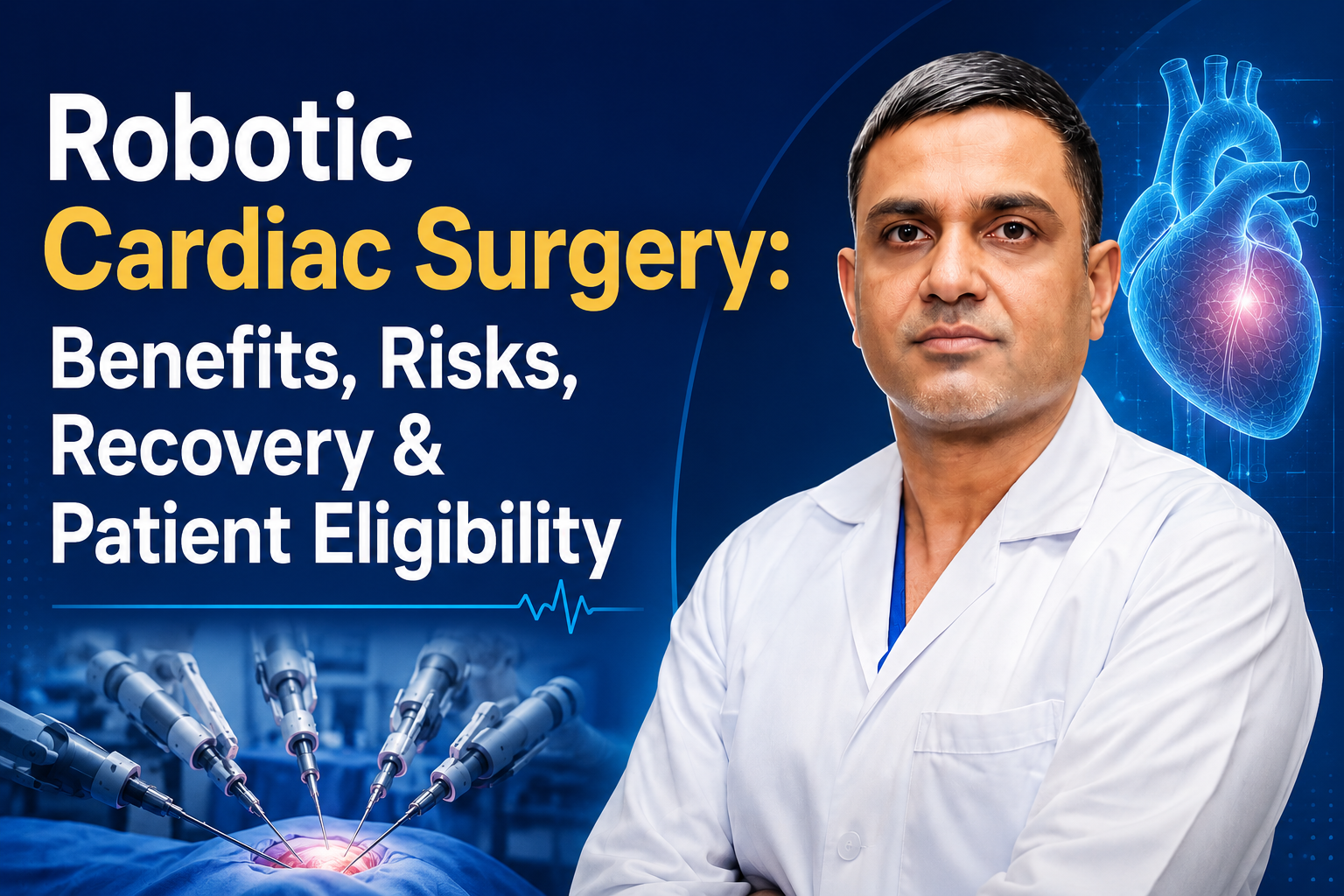
Robotic cardiac surgery is an advanced form of minimally invasive heart surgery that allows surgeons to perform selected cardiac procedures through small incisions in the chest. Using specialized robotic instruments and a high-definition camera, the surgeon can perform precise movements while viewing the operating area in detail.
For patients who are suitable candidates, robotic cardiac surgery may offer benefits such as smaller incisions, reduced surgical trauma and a potentially faster recovery compared with some conventional surgical approaches.
However, robotic surgery is not appropriate for every heart patient or every cardiac condition. The decision depends on the patient’s diagnosis, heart anatomy, overall health, previous surgeries and the experience of the cardiac surgical team.
What Is Robotic Cardiac Surgery?
Robotic cardiac surgery is a minimally invasive surgical technique in which a cardiac surgeon controls specialized robotic instruments from a console.
The robotic system does not independently perform the operation. The surgeon remains in complete control of the instruments and performs the procedure.
A small camera provides a magnified, high-definition view of the surgical area. The surgeon then uses specially designed instruments to perform precise surgical movements through small openings in the chest.
Depending on the patient’s condition, robotic techniques may be considered for selected procedures involving the heart and surrounding structures.
How Does Robotic Cardiac Surgery Work?
Although the exact procedure varies depending on the patient’s condition, robotic cardiac surgery generally involves several stages.
1. Detailed evaluation
Before surgery, the cardiac team evaluates the patient’s medical history, symptoms, heart condition and overall health.
Depending on the condition, investigations may include:
- Echocardiography
- Electrocardiogram (ECG)
- CT or other imaging
- Coronary angiography
- Blood tests
- Other cardiac investigations
These tests help the surgical team determine whether a minimally invasive or robotic approach is appropriate.
2. Small surgical incisions
Instead of one large incision used in some conventional approaches, robotic surgery may use several smaller openings between the ribs.
The exact location and number of incisions depend on the procedure being performed.
3. Robotic instruments are positioned
Specialized robotic instruments and a small camera are introduced through the incisions.
The camera provides an enlarged view of the surgical field, helping the surgeon visualize important structures.
4. The surgeon performs the operation
The surgeon sits at a specialized console and controls the robotic instruments.
The robotic system translates the surgeon’s hand movements into highly precise movements of the instruments inside the patient’s chest.
5. Recovery and monitoring
After surgery, the patient is closely monitored in the hospital. The recovery process varies depending on the procedure, the patient’s health and whether any complications occur.
What Are the Benefits of Robotic Cardiac Surgery?
Robotic cardiac surgery is designed to provide a minimally invasive alternative for selected patients.
Potential benefits may include:
Smaller incisions
Robotic procedures generally use smaller openings than traditional open-heart approaches. This can result in smaller surgical scars.
Reduced surgical trauma
Because the approach can avoid a large chest incision in selected procedures, there may be less disruption to surrounding tissues.
Precise surgical movements
The robotic system provides the surgeon with highly detailed visualization and allows controlled instrument movements.
Potentially shorter recovery
Some appropriately selected patients may experience a quicker recovery compared with certain conventional surgical approaches.
However, recovery varies considerably from one patient to another.
Potentially less postoperative discomfort
Smaller incisions may be associated with less discomfort for some patients, although pain varies depending on the individual and the procedure.
Earlier return to normal activities
Some patients may be able to resume everyday activities sooner after minimally invasive surgery. The timing should always be determined by the treating surgical team.
Is Robotic Cardiac Surgery Safe?
Robotic cardiac surgery can be a safe and effective option for appropriately selected patients when performed by an experienced cardiac surgical team.
However, robotic surgery is still major heart surgery, and it carries potential risks.
Possible complications can include:
- Bleeding
- Infection
- Abnormal heart rhythm
- Blood clots
- Breathing problems
- Anesthesia-related complications
- Conversion to another surgical approach when necessary
- Other complications related to the patient’s underlying heart condition
The level of risk varies from patient to patient.
A surgeon should evaluate the patient’s individual medical condition before recommending a particular surgical technique.
Who Is a Candidate for Robotic Cardiac Surgery?
Not every patient requiring heart surgery is a candidate for a robotic approach.
Suitability may depend on:
- The type of heart condition
- Coronary artery anatomy
- Valve disease and valve anatomy
- Previous heart or chest surgery
- Overall health
- Lung function
- Body structure
- Other medical conditions
- Complexity of the planned procedure
- Experience and facilities available at the treating center
A detailed evaluation is therefore essential before deciding whether robotic cardiac surgery is appropriate.
Can Every Heart Surgery Be Performed Robotically?
No.
Robotic cardiac surgery is suitable only for selected procedures and carefully chosen patients.
Some patients may benefit from a minimally invasive or robotic approach, while others may require conventional surgery.
The safest approach is not necessarily the newest or most technologically advanced option. The right approach is the one that provides the best balance of safety and effectiveness for the individual patient.
What Heart Procedures Can Be Performed Using Robotic Techniques?
Depending on the patient’s condition and the surgical team’s expertise, robotic techniques may be used for selected cardiac procedures.
These can include certain:
- Coronary artery bypass procedures
- Valve repair procedures
- Valve surgery
- Procedures involving the mitral valve
- Other selected minimally invasive cardiac procedures
The availability of robotic techniques varies between hospitals and cardiac centers.
Patients should discuss their specific diagnosis with a cardiac surgeon to determine whether a robotic approach is suitable.
What Is Robotic CABG?
Robotic CABG, or robotic coronary artery bypass grafting, is a minimally invasive approach to selected coronary artery bypass procedures.
CABG is performed to improve blood flow to heart muscle when coronary arteries are narrowed or blocked.
In selected patients, robotic technology may be incorporated into the surgical procedure to allow the surgeon to work through smaller access points.
However, robotic CABG is not suitable for every patient with coronary artery disease.
The coronary anatomy, number and location of blockages, overall health and other factors must be evaluated before choosing the surgical approach.
Robotic Cardiac Surgery vs Open Heart Surgery
Patients often ask whether robotic cardiac surgery is better than traditional open-heart surgery.
The answer is not the same for everyone.
| Robotic Cardiac Surgery | Conventional Open-Heart Surgery |
| Uses smaller surgical access points in selected procedures | May involve a larger chest incision |
| Minimally invasive approach | Conventional surgical approach |
| Uses specialized robotic instruments | Uses conventional surgical instruments |
| Surgeon controls the robotic system | Surgeon directly performs the procedure |
| May allow potentially faster recovery in selected patients | Recovery may be longer depending on the procedure |
| Suitable only for selected patients and procedures | Appropriate for a broader range of complex procedures |
The choice should be based on medical suitability rather than technology alone.
Robotic Cardiac Surgery Recovery: What Should Patients Expect?
Recovery depends on the type of procedure, the patient’s overall health and whether complications occur.
A typical recovery process may involve:
Early recovery
The patient is monitored closely after surgery. Doctors and nurses monitor heart function, breathing, pain, and other important parameters.
Mobilization
Patients are generally encouraged to begin appropriate movement as advised by the medical team.
Hospital recovery
The duration of hospitalization varies according to the procedure and individual recovery.
Returning home
Before discharge, the healthcare team provides instructions regarding medications, wound care, physical activity and follow-up.
Long-term recovery
Patients gradually return to their normal routine according to their surgeon’s recommendations.
Physical activity should be increased gradually rather than rushed.
How Long Does Recovery Take After Robotic Heart Surgery?
There is no single recovery timeline that applies to every patient.
Recovery depends on:
- The type of surgery
- Age
- Overall health
- Heart function
- Other medical conditions
- Surgical complications
- Physical fitness
- Postoperative care
Some patients recover relatively quickly after minimally invasive procedures, while others require more time.
Your cardiac surgeon can provide a more individualized recovery plan after evaluating your condition.
Is Robotic Cardiac Surgery Better Than Minimally Invasive Cardiac Surgery?
Robotic cardiac surgery is itself a form of minimally invasive surgery.
The term minimally invasive cardiac surgery covers several techniques that aim to perform cardiac procedures through smaller surgical access points.
Robotic surgery uses a specialized robotic platform controlled by the surgeon.
Therefore, the terms should not automatically be treated as competing procedures.
The important question is:
Which surgical technique is most appropriate for the patient’s specific heart condition?
What Questions Should You Ask Your Cardiac Surgeon?
Before deciding on robotic cardiac surgery, patients can consider asking:
- What type of heart surgery do I need?
- Am I a suitable candidate for robotic surgery?
- Why do you recommend this surgical approach for me?
- What are the potential benefits?
- What are the possible risks?
- Are there alternative surgical approaches?
- What will my recovery involve?
- How long might I need to stay in the hospital?
- When can I return to normal activities?
- What follow-up care will I need?
A good consultation should allow you to understand both the advantages and limitations of the recommended approach.
Robotic Cardiac Surgery in Ahmedabad and Gujarat
Patients searching for robotic cardiac surgery in Ahmedabad or Gujarat should look beyond the technology itself when evaluating a cardiac surgery center.
Important factors may include:
- The surgeon’s qualifications and experience
- Experience with the specific cardiac procedure required
- Availability of appropriate cardiac facilities
- Intensive care support
- Anesthesia and cardiac critical-care expertise
- Postoperative monitoring
- Follow-up care
- The suitability of robotic or minimally invasive surgery for the individual patient
Most importantly, patients should confirm whether the recommended procedure is appropriate for their specific heart condition.
Why Individual Evaluation Matters
Two patients can have similar symptoms but require completely different treatments.
For example, two people with coronary artery disease may have different:
- Locations of arterial blockages
- Number of affected vessels
- Heart function
- Medical conditions
- Surgical histories
Therefore, one patient may be considered for a minimally invasive or robotic approach while another may require a different surgical technique.
Robotic cardiac surgery should be considered as a treatment option, not as a universal replacement for conventional cardiac surgery.
Frequently Asked Questions About Robotic Cardiac Surgery
What is robotic cardiac surgery?
Robotic cardiac surgery is a minimally invasive surgical technique in which a cardiac surgeon controls specialized robotic instruments to perform selected heart procedures through small surgical access points.
Does the robot perform the heart surgery by itself?
No. The surgeon controls the robotic system throughout the procedure. The robot does not independently make surgical decisions or perform the operation.
Is robotic cardiac surgery safe?
Robotic cardiac surgery can be safe for appropriately selected patients when performed by an experienced cardiac surgical team. Like other major heart surgeries, it carries potential risks.
Who can undergo robotic cardiac surgery?
Eligibility depends on the patient’s heart condition, anatomy, overall health, previous surgeries and other clinical factors. A cardiac surgeon must evaluate the patient before recommending this approach.
Is robotic cardiac surgery suitable for everyone?
No. Some heart conditions and complex cases may require another surgical approach.
What is robotic CABG?
Robotic CABG is a minimally invasive approach to selected coronary artery bypass procedures. Whether it is appropriate depends on the patient’s coronary anatomy and overall clinical condition.
How long does recovery take after robotic cardiac surgery?
Recovery varies according to the procedure and the patient’s health. Your surgeon can provide a personalized recovery estimate after evaluating your condition.
Does robotic cardiac surgery leave a scar?
Robotic procedures generally use smaller surgical access points than many conventional open-heart procedures, so the resulting scars may be smaller. The exact scars depend on the procedure performed.
Is robotic heart surgery better than open-heart surgery?
Neither approach is universally better. The appropriate surgical method depends on the patient’s diagnosis, anatomy, health and the complexity of the procedure.
Where can I get robotic cardiac surgery in Ahmedabad?
Availability depends on the hospital, cardiac surgical team, technology and the specific procedure required. Patients should consult a qualified cardiac surgeon to determine whether robotic surgery is appropriate for their condition.
Conclusion
Robotic cardiac surgery represents an important development in minimally invasive cardiac care. By combining advanced visualization with surgeon-controlled robotic instruments, it can allow selected cardiac procedures to be performed through smaller surgical access points.
However, robotic technology is not suitable for every patient.
The most important step is to receive a detailed evaluation from an experienced cardiac surgical team and understand the available treatment options. Your diagnosis, heart anatomy, overall health and surgical requirements should guide the choice of procedure.
If you or a family member has been advised to undergo heart surgery, discuss whether a robotic, minimally invasive or conventional approach is appropriate for your specific condition with your cardiac surgeon.