Heart health is one of the most important aspects of overall well-being, and a diagnosis of coronary artery disease can raise many questions for patients and their families. When a doctor recommends coronary artery bypass grafting (CABG), choosing the right cardiac surgeon becomes an important part of the treatment journey. Understanding the surgeon’s qualifications, relevant experience, surgical approach and hospital facilities can help patients make an informed decision.
If you are searching for the best bypass surgeon, it is important to look beyond online rankings and promotional claims. Patients should understand their medical condition, discuss the available treatment options and choose a qualified specialist who can explain the benefits and risks clearly.
Dr. Brajmohan Singh is a Cardiothoracic and Vascular Surgeon whose practice includes BIMA bypass surgery, off-pump coronary artery bypass grafting (OPCABG) and minimally invasive cardiac surgery. This guide explains what patients should consider when selecting a bypass surgeon in Ahmedabad and which questions to ask before making a treatment decision.
What Does a Bypass Surgeon Do?
A bypass surgeon is a cardiac surgeon who performs coronary artery bypass grafting, commonly known as CABG. The procedure creates a new route for blood to flow around narrowed or blocked coronary arteries, helping restore blood supply to the heart muscle.
During CABG, the surgeon uses a blood vessel from another part of the body, such as the chest or leg, to create a bypass around the affected artery. Depending on the patient’s condition, one or more bypass grafts may be required.
A cardiac team may recommend bypass surgery for certain patients with significant coronary artery disease, including those with multiple blocked arteries or other complex heart conditions. However, the most appropriate treatment depends on the individual patient’s test results, symptoms, overall health and clinical assessment.
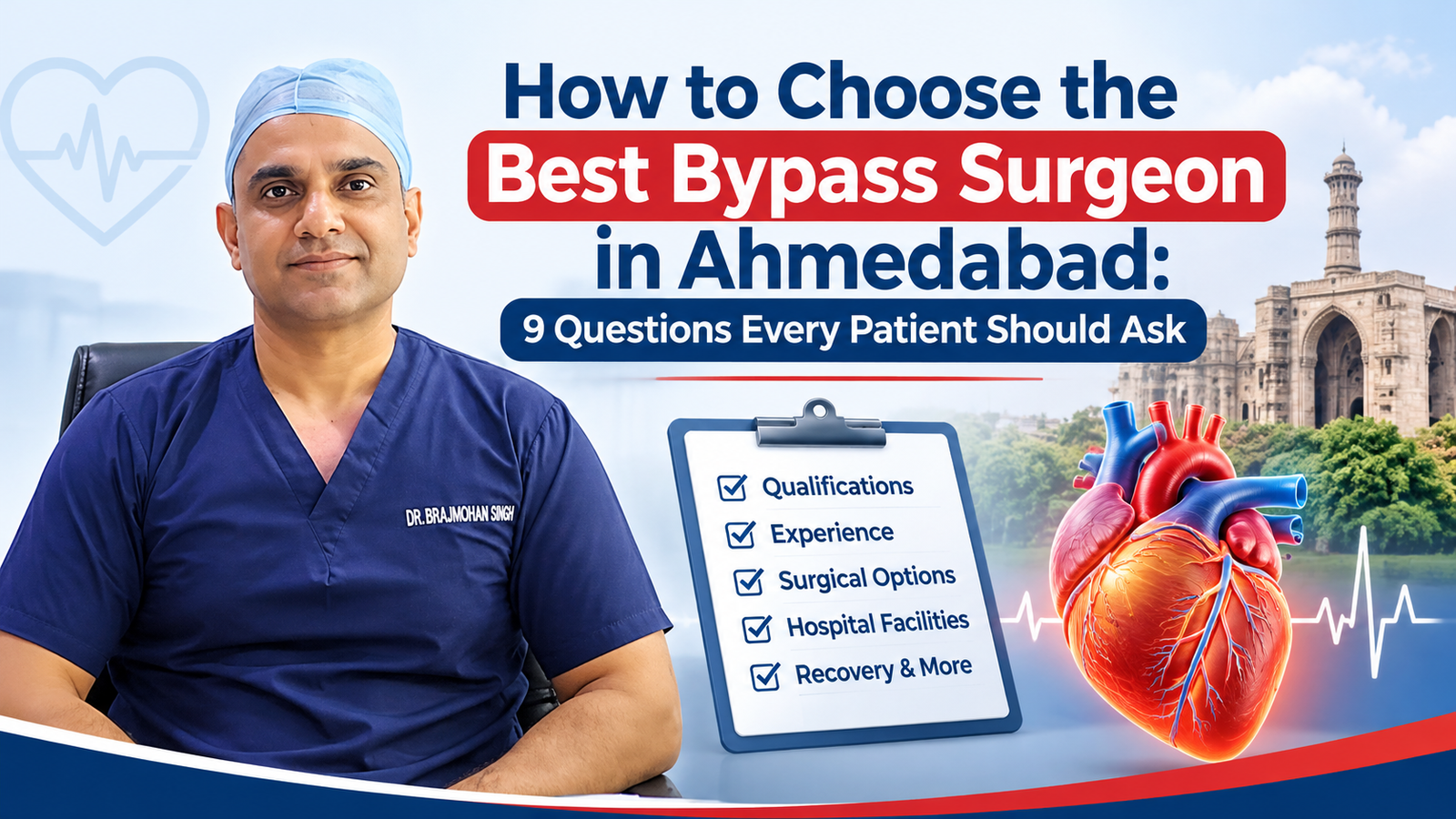
9 Questions to Ask When Choosing the Best Bypass Surgeon
Finding the right cardiac surgeon involves more than comparing names on the internet. These nine questions can help patients prepare for a consultation and understand their treatment options.
1. What Are the Surgeon’s Qualifications?
Start by checking the surgeon’s medical qualifications, specialist training and professional registration. Cardiac surgery requires specific training and knowledge of heart conditions, surgical procedures and postoperative care.
Patients should also review the surgeon’s professional profile to understand their area of specialization.
Dr. Brajmohan Singh is identified on BimaBypass.com as a Cardiothoracic and Vascular Surgeon. Patients considering treatment with him can review the qualifications and professional information published on his profile and discuss any additional questions directly during a consultation.
2. How Much Experience Does the Surgeon Have With CABG?
Experience with coronary artery bypass grafting is an important consideration, particularly when a patient has complex coronary artery disease or other medical conditions.
Ask the surgeon about their experience with procedures relevant to your diagnosis. You may also want to understand how the surgical team manages complex cases and what follow-up care is available.
Rather than relying on a single number or general claim, consider whether the surgeon can explain the proposed procedure, its potential risks and the reasons it is appropriate for your specific condition.
3. Which Type of Bypass Surgery Is Suitable for You?
Not every patient requires the same surgical approach. Depending on the patient’s coronary anatomy and medical history, the cardiac team may consider conventional CABG, off-pump CABG, BIMA grafting or selected minimally invasive approaches.
Here is a brief explanation of these techniques:
- Conventional CABG: Bypass surgery that commonly uses a heart-lung machine while the heart is temporarily stopped during the procedure.
- OPCABG: Off-pump coronary artery bypass grafting, performed on the beating heart without using a heart-lung machine for the bypass procedure.
- BIMA bypass surgery: Uses both internal mammary arteries as grafts to bypass affected coronary arteries when appropriate.
- Minimally invasive cardiac surgery: Uses smaller incisions in selected cases, depending on the procedure and the patient’s suitability.
Each technique has potential advantages and limitations. The appropriate approach depends on clinical factors and the surgeon’s assessment. Ask why a particular technique is recommended for you rather than assuming that one method is always better than another.
4. Does the Surgeon Explain the Risks and Benefits Clearly?
A good consultation should help you understand your condition and the proposed treatment in language you can follow.
Before agreeing to bypass surgery, ask about:
- The expected benefits of the procedure.
- Possible complications and individual risk factors.
- Alternative treatment options, where appropriate.
- The expected hospital stay and recovery process.
- The need for medication and long-term follow-up.
The risks associated with CABG can vary according to age, heart function, kidney health, diabetes and other medical conditions. Your surgeon should explain the risks in the context of your individual health.
If you are unsure about the recommendation, discussing the case with another qualified specialist may help you make a more informed decision.
5. What Hospital Facilities and Support Are Available?
Bypass surgery requires coordinated care involving cardiac surgeons, cardiologists, anaesthesiologists, nursing professionals and other healthcare staff.
When comparing treatment options, ask about the hospital’s cardiac surgery facilities, intensive care arrangements, emergency support and postoperative monitoring.
It is also useful to understand who will coordinate your care after surgery and whom you should contact if you have concerns during recovery.
The surgeon and hospital team should be able to explain the care pathway before, during and after the procedure.
6. Does the Surgeon Consider Your Overall Medical Condition?
The decision to perform CABG is based on more than the presence of a blocked artery. The cardiac team may review coronary angiography, heart function, symptoms, existing illnesses, medications and other relevant investigations.
Patients with diabetes, reduced kidney function or other health conditions may need additional assessment and careful planning.
A suitable treatment plan should be based on your medical needs rather than a general recommendation applied to every patient.
When meeting Dr. Brajmohan Singh or another cardiac surgeon, bring your recent reports, medication list and relevant medical history. This can help the doctor assess your condition and discuss the available options.
7. What Can You Expect During Recovery?
Recovery after bypass surgery varies from person to person. It depends on the surgical approach, the patient’s overall health and whether complications occur.
Patients undergoing traditional CABG may need several weeks of recovery at home. The treating team will provide guidance on wound care, physical activity, medication, follow-up appointments and cardiac rehabilitation when appropriate.
Before surgery, ask:
- How long might I stay in the hospital?
- When can I gradually resume daily activities?
- What restrictions should I follow at home?
- Will I need cardiac rehabilitation?
- Which symptoms require urgent medical attention?
Follow the instructions provided by your treating team, and do not change prescribed medication without medical advice.
8. How Does the Surgeon Measure and Discuss Treatment Outcomes?
Patients often look for success rates when searching for the best bypass surgeon. However, outcome figures need context.
Ask whether the surgeon or hospital can explain relevant outcomes for patients with a condition similar to yours, how those outcomes are measured and what factors may influence your individual results.
It is important to distinguish between the number of procedures performed, reported success rates and outcomes such as complications, long-term graft function or survival.
No surgeon can guarantee a particular outcome. Transparent discussions about risks, benefits and realistic expectations are more useful than unsupported claims.
9. Is Long-Term Follow-Up Part of the Treatment Plan?
Bypass surgery improves blood flow to the heart in appropriate patients, but it does not eliminate the underlying tendency to develop coronary artery disease.
Long-term care may include prescribed medication, cholesterol and blood pressure management, diabetes control, a heart-healthy diet, suitable physical activity and smoking cessation where relevant.
Ask how follow-up appointments will be arranged and whether the care team will coordinate with your cardiologist.
Continuing medical care after surgery is an important part of managing heart health over time.
Why Consider Dr. Brajmohan Singh for a Cardiac Surgery Consultation?
Patients researching a bypass surgeon in Ahmedabad may wish to learn more about Dr. Brajmohan Singh and his cardiac surgery practice.
According to the information published on BimaBypass.com, Dr. Singh is a Cardiothoracic and Vascular Surgeon whose areas of practice include:
- BIMA bypass surgery.
- Off-pump coronary artery bypass grafting (OPCABG).
- Minimally invasive cardiac surgery.
- Evaluation and surgical management of selected cardiac conditions.
Patients can review his published professional profile and arrange a consultation to discuss their diagnosis, medical reports and available treatment options.
Choosing a surgeon should ultimately be based on your medical needs, relevant surgical experience, the facilities available and the quality of communication during the consultation. The best treatment approach is the one that is appropriate for your individual condition and is recommended after a proper medical evaluation.
When Should You Consult a Cardiac Surgeon?
Consider discussing your condition with a qualified cardiac specialist if your cardiologist has recommended bypass surgery, your coronary angiography shows significant blockages, or you have questions about the suitability of CABG compared with other treatment options.
A consultation can help clarify your diagnosis, explain the available procedures and identify the next steps in your care.
Important: If you experience new or severe chest pain, particularly with breathlessness, sweating, faintness or pain spreading to your arm or jaw, seek emergency medical attention rather than waiting for a routine appointment.
Frequently Asked Questions
Who is the best bypass surgeon in Ahmedabad?
There is no single ranking that can establish the best bypass surgeon for every patient. Consider specialist qualifications, experience with your condition, the hospital’s cardiac care facilities, transparent communication and the surgeon’s ability to explain treatment options. Dr. Brajmohan Singh is a Cardiothoracic and Vascular Surgeon whose professional details and areas of practice are available on BimaBypass.com.
What qualifications should a bypass surgeon have?
A bypass surgeon should have recognized medical qualifications and specialist training in cardiothoracic or cardiac surgery, along with the appropriate professional registration. Patients should verify credentials and ask about experience with the procedure relevant to their condition.
What is the difference between CABG and OPCABG?
CABG is the general term for coronary artery bypass grafting. Conventional CABG commonly uses a heart-lung machine, whereas OPCABG is performed on the beating heart without using that machine for the bypass procedure. Suitability depends on the patient’s condition and the surgical team’s assessment.
Is BIMA bypass surgery suitable for everyone?
No. BIMA bypass surgery uses both internal mammary arteries as grafts, but it is not suitable for every patient. The surgeon considers coronary anatomy, individual risk factors, the condition of the blood vessels and other clinical factors before recommending an approach.
How long does recovery after bypass surgery take?
Recovery varies according to the patient’s health, the surgical procedure and whether complications occur. Recovery after traditional CABG often takes several weeks, and some patients require longer. The treating team will provide an individualized recovery plan.
What should I bring to my first bypass surgery consultation?
Bring your coronary angiography reports and images, ECG, echocardiogram, recent blood test results, current medication list, previous medical records and a list of questions. Your doctor can tell you if any additional investigations are needed.
How can I book a consultation with Dr. Brajmohan Singh?
Visit to review Dr. Brajmohan Singh’s professional information and use the contact or consultation options available on the website.
Conclusion
Choosing the best bypass surgeon is an important decision that deserves careful research and a clear understanding of your treatment options. Qualifications, relevant surgical experience, hospital support, honest discussions about risks and benefits, and long-term follow-up should all be part of the decision-making process.
Dr. Brajmohan Singh is a Cardiothoracic and Vascular Surgeon whose practice includes BIMA bypass surgery, OPCABG and minimally invasive cardiac surgery. Patients considering bypass surgery can review his professional information on BimaBypass.com and arrange a consultation to discuss their individual medical needs.
An informed conversation with a qualified cardiac surgeon can help you understand your options and take the next step in your heart-care journey.