Heart surgery has evolved dramatically over the last few decades. Traditional open-heart surgery once required large chest incisions, longer hospital stays, and extended recovery periods. Today, modern cardiac care offers safer and less invasive alternatives. One of the most advanced procedures transforming heart treatment is keyhole cardiac surgery.
Patients looking for faster recovery, less pain, minimal scarring, and reduced complications are increasingly choosing keyhole cardiac surgery over conventional open-heart surgery. This advanced surgical technique allows experienced heart surgeons to perform complex procedures through small incisions without fully opening the chest.
At BIMA Bypass Surgery, Dr. Brajmohan Singh specializes in advanced minimally invasive heart procedures designed to improve patient comfort, surgical precision, and recovery outcomes.
In this comprehensive guide, you will learn everything about keyhole cardiac surgery, including its benefits, procedure, recovery process, risks, eligibility, and why it is becoming a preferred choice for modern heart treatment.
What Is Keyhole Cardiac Surgery?
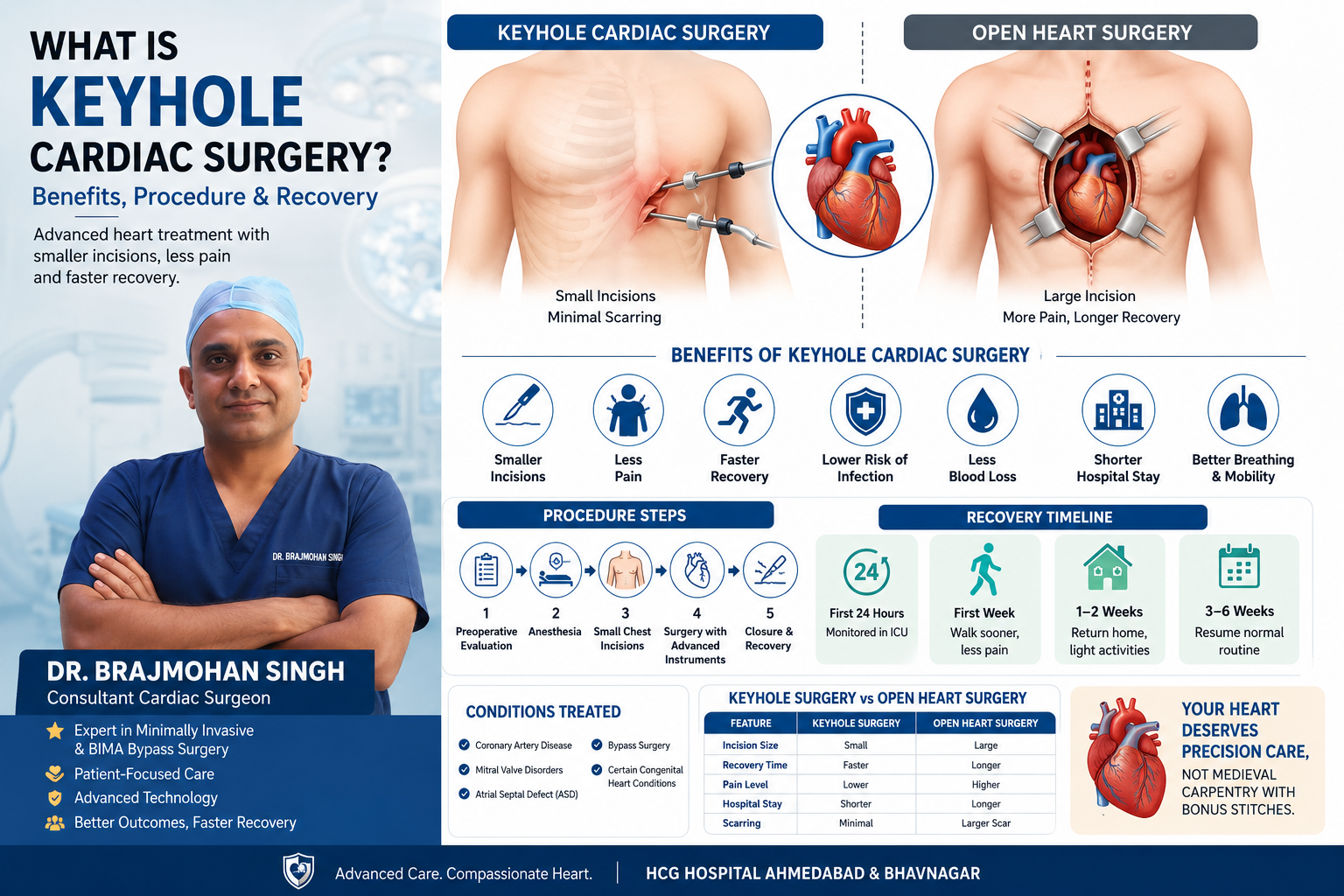
Keyhole cardiac surgery is a minimally invasive heart surgery performed through small incisions in the chest instead of the large incision used in traditional open-heart surgery.
In conventional surgery, the breastbone is usually divided to access the heart. However, in keyhole cardiac surgery, surgeons use specialized instruments and advanced imaging technology to perform the procedure through tiny openings, often between the ribs.
This advanced approach helps reduce surgical trauma while maintaining high precision and excellent treatment outcomes.
Keyhole cardiac surgery may be used for several heart conditions, including:
- Coronary artery disease
- Heart valve disorders
- Atrial septal defects
- Mitral valve repair
- Cardiac bypass procedures
- Certain congenital heart conditions
Because the procedure is less invasive, patients often experience quicker healing and can return to daily activities sooner.
How Does Keyhole Cardiac Surgery Work?
During keyhole cardiac surgery, the surgeon creates small incisions on the side of the chest. Specialized surgical tools and miniature cameras are inserted through these openings to perform the operation.
High-definition imaging allows the surgeon to view the heart with exceptional clarity while avoiding the need for a large chest incision.
Depending on the condition being treated, the surgeon may:
- Repair damaged heart valves
- Perform bypass grafting
- Correct structural heart abnormalities
- Restore blood flow to blocked arteries
The goal of keyhole cardiac surgery is to achieve the same or better results as traditional surgery while minimizing physical stress on the patient.
Benefits of Keyhole Cardiac Surgery
One of the primary reasons patients prefer keyhole cardiac surgery is the wide range of advantages it offers compared to traditional open-heart procedures.
1. Smaller Incisions
Unlike conventional surgery, keyhole cardiac surgery requires only small incisions. This means less visible scarring and improved cosmetic outcomes.
Patients often appreciate the reduced impact on the chest wall and the ability to heal with minimal marks.
2. Less Pain After Surgery
Because the chest bone is usually not fully divided, patients undergoing keyhole cardiac surgery often experience significantly less postoperative pain.
Reduced pain levels also contribute to improved mobility during recovery.
3. Faster Recovery Time
Recovery after keyhole cardiac surgery is typically faster than traditional open-heart surgery.
Many patients:
- Walk sooner
- Return home earlier
- Resume work faster
- Recover daily function more quickly
This shorter recovery period is one of the biggest advantages of minimally invasive heart surgery.
4. Reduced Risk of Infection
Smaller surgical incisions lower the risk of wound infections and complications.
For elderly patients and individuals with diabetes or weakened immunity, keyhole cardiac surgery may offer a safer surgical option.
5. Less Blood Loss
Traditional heart surgery may involve significant blood loss due to larger incisions. In contrast, keyhole cardiac surgery minimizes tissue damage and often reduces the need for blood transfusions.
6. Shorter Hospital Stay
Patients who undergo keyhole cardiac surgery usually spend fewer days in the hospital compared to patients who undergo conventional surgery.
This not only improves comfort but also reduces overall treatment costs and emotional stress.
7. Improved Breathing and Mobility
Because the chest structure remains more stable after keyhole cardiac surgery, patients often find it easier to breathe, cough, and move during recovery.
This contributes to a smoother healing process.
Who Is a Candidate for Keyhole Cardiac Surgery?
Not every patient is suitable for keyhole cardiac surgery. Eligibility depends on several factors, including the patient’s heart condition, age, medical history, and overall health.
You may be a candidate if you have:
- Blocked coronary arteries
- Mitral valve disease
- Heart rhythm disorders
- Congenital heart defects
- Need for bypass surgery
- Structural cardiac abnormalities
An experienced cardiac surgeon such as Dr. Brajmohan Singh will evaluate your condition using advanced diagnostic tests before recommending the most appropriate treatment plan.
Conditions Treated with Keyhole Cardiac Surgery
Modern keyhole cardiac surgery techniques can treat various heart problems effectively.
Coronary Artery Disease
Patients with blocked heart arteries may benefit from minimally invasive bypass surgery to restore proper blood flow.
Mitral Valve Disease
Mitral valve repair or replacement can often be performed using keyhole cardiac surgery, reducing recovery time and surgical trauma.
Atrial Septal Defect (ASD)
Certain congenital heart defects such as ASD can be corrected through minimally invasive procedures.
Tricuspid Valve Disorders
Advanced minimally invasive techniques can also treat tricuspid valve abnormalities safely and effectively.
Procedure of Keyhole Cardiac Surgery
Understanding the procedure can help patients feel more confident and prepared.
Step 1: Preoperative Evaluation
Before keyhole cardiac surgery, patients undergo several medical tests, including:
- ECG
- Echocardiography
- CT scans
- Blood tests
- Coronary angiography
These tests help determine surgical suitability and planning.
Step 2: Anesthesia
The surgery is performed under general anesthesia to ensure patient comfort and safety.
Step 3: Small Chest Incisions
The surgeon creates small incisions between the ribs to access the heart.
Unlike traditional surgery, the breastbone usually remains intact.
Step 4: Surgical Procedure
Specialized instruments and camera systems are used to perform the heart surgery with precision.
The exact procedure depends on the heart condition being treated.
Step 5: Closure and Recovery
After the operation, the incisions are carefully closed, and the patient is transferred to intensive care for monitoring.
Recovery After Keyhole Cardiac Surgery
Recovery after keyhole cardiac surgery is generally smoother and quicker than conventional heart surgery.
First 24 Hours
Patients are monitored closely in the ICU. Vital signs, breathing, and heart function are continuously assessed.
First Week
Most patients begin walking within a day or two after surgery.
Pain is usually manageable with medication, and breathing exercises help improve lung function.
Returning Home
Hospital discharge may occur within a few days depending on recovery progress.
Patients receive instructions regarding:
- Medications
- Diet
- Physical activity
- Wound care
- Follow-up visits
Returning to Normal Activities
Many patients can resume normal daily activities within a few weeks after keyhole cardiac surgery.
Recovery speed varies depending on age, overall health, and the type of surgery performed.
Risks of Keyhole Cardiac Surgery
Although keyhole cardiac surgery is considered safe and effective, all surgeries carry some risks.
Potential complications may include:
- Bleeding
- Infection
- Irregular heartbeat
- Stroke
- Blood clots
- Anesthesia-related complications
Choosing an experienced cardiac surgeon significantly reduces surgical risks and improves outcomes.
Keyhole Cardiac Surgery vs Open Heart Surgery
Patients often compare keyhole cardiac surgery with traditional open-heart surgery before making a treatment decision.
| Feature | Keyhole Cardiac Surgery | Open Heart Surgery |
| Incision Size | Small | Large |
| Chest Bone Cutting | Usually No | Yes |
| Recovery Time | Faster | Longer |
| Pain Level | Lower | Higher |
| Blood Loss | Less | More |
| Hospital Stay | Shorter | Longer |
| Scarring | Minimal | Larger Scar |
For suitable candidates, keyhole cardiac surgery offers significant advantages in recovery and comfort.
Is Keyhole Cardiac Surgery Safe?
Yes, keyhole cardiac surgery is considered safe when performed by experienced specialists using advanced surgical technology.
Modern minimally invasive techniques have improved surgical precision, reduced complications, and enhanced patient outcomes.
The success rate depends on:
- Patient health
- Type of heart disease
- Surgical expertise
- Hospital infrastructure
At HCG Hospital Ahmedabad and Bhavnagar, patients receive advanced cardiac care with personalized treatment planning and comprehensive postoperative support.
Why Choose Dr. Brajmohan Singh for Keyhole Cardiac Surgery?
Choosing the right heart surgeon is one of the most important decisions for successful treatment.
Dr. Brajmohan Singh is recognized for expertise in advanced cardiac procedures and minimally invasive heart surgery techniques.
Patients benefit from:
- Personalized treatment plans
- Advanced surgical technology
- Modern operation facilities
- Comprehensive cardiac care
- Patient-focused recovery programs
The goal is to provide safer treatment, faster recovery, and improved quality of life for every patient.
Lifestyle Tips After Keyhole Cardiac Surgery
Maintaining heart health after surgery is essential for long-term recovery.
Follow a Heart-Healthy Diet
Eat:
- Fresh fruits
- Vegetables
- Whole grains
- Lean proteins
- Healthy fats
Avoid:
- Excess salt
- Processed foods
- Sugary drinks
- Smoking
Stay Physically Active
Regular walking and light exercise improve circulation and strengthen heart function.
Always follow your doctor’s recommendations regarding activity levels.
Take Medications Properly
Medications help manage blood pressure, cholesterol, and heart rhythm after surgery.
Never skip prescribed medicines without medical advice.
Attend Follow-Up Appointments
Regular follow-up visits help monitor healing and long-term heart health after keyhole cardiac surgery.
Frequently Asked Questions
What is the recovery time for keyhole cardiac surgery?
Most patients recover faster after keyhole cardiac surgery compared to traditional open-heart surgery. Recovery may take several weeks, depending on the procedure and overall health.
Is keyhole cardiac surgery painful?
Pain is generally less severe because the surgery uses smaller incisions and avoids major cutting of the chest bone.
Can elderly patients undergo keyhole cardiac surgery?
Yes, many elderly patients are suitable candidates for keyhole cardiac surgery due to reduced surgical trauma and faster recovery.
Is keyhole cardiac surgery better than open-heart surgery?
For eligible patients, keyhole cardiac surgery offers benefits such as smaller scars, less pain, quicker recovery, and shorter hospital stays.
How successful is keyhole cardiac surgery?
Modern keyhole cardiac surgery has high success rates when performed by experienced cardiac surgeons using advanced techniques.
Final Thoughts
Advancements in minimally invasive heart treatment have transformed modern cardiac care. Keyhole cardiac surgery offers patients a safer, less painful, and faster alternative to traditional open-heart surgery.
With smaller incisions, quicker recovery, reduced complications, and excellent surgical outcomes, this advanced technique continues to improve the lives of heart patients worldwide.
If you are considering treatment for heart disease, consulting an experienced specialist is essential. Dr. Brajmohan Singh provides expert evaluation and advanced minimally invasive cardiac care tailored to each patient’s needs.
Your heart deserves precision care, not medieval carpentry with bonus stitches.