Heart bypass surgery is a life-saving procedure, but the journey doesn’t end in the operating room. In many ways, that’s where a new chapter begins. Recovery after bypass surgery is like rebuilding a city after a storm, slow, deliberate, and ultimately transformative.
If you or a loved one has undergone bypass surgery, understanding the recovery timeline can reduce anxiety and help you heal with confidence. In this comprehensive guide, we’ll walk you through what to expect after heart surgery, from the first hours to long-term recovery, along with expert-backed advice from Dr. BrajMohan Singh.
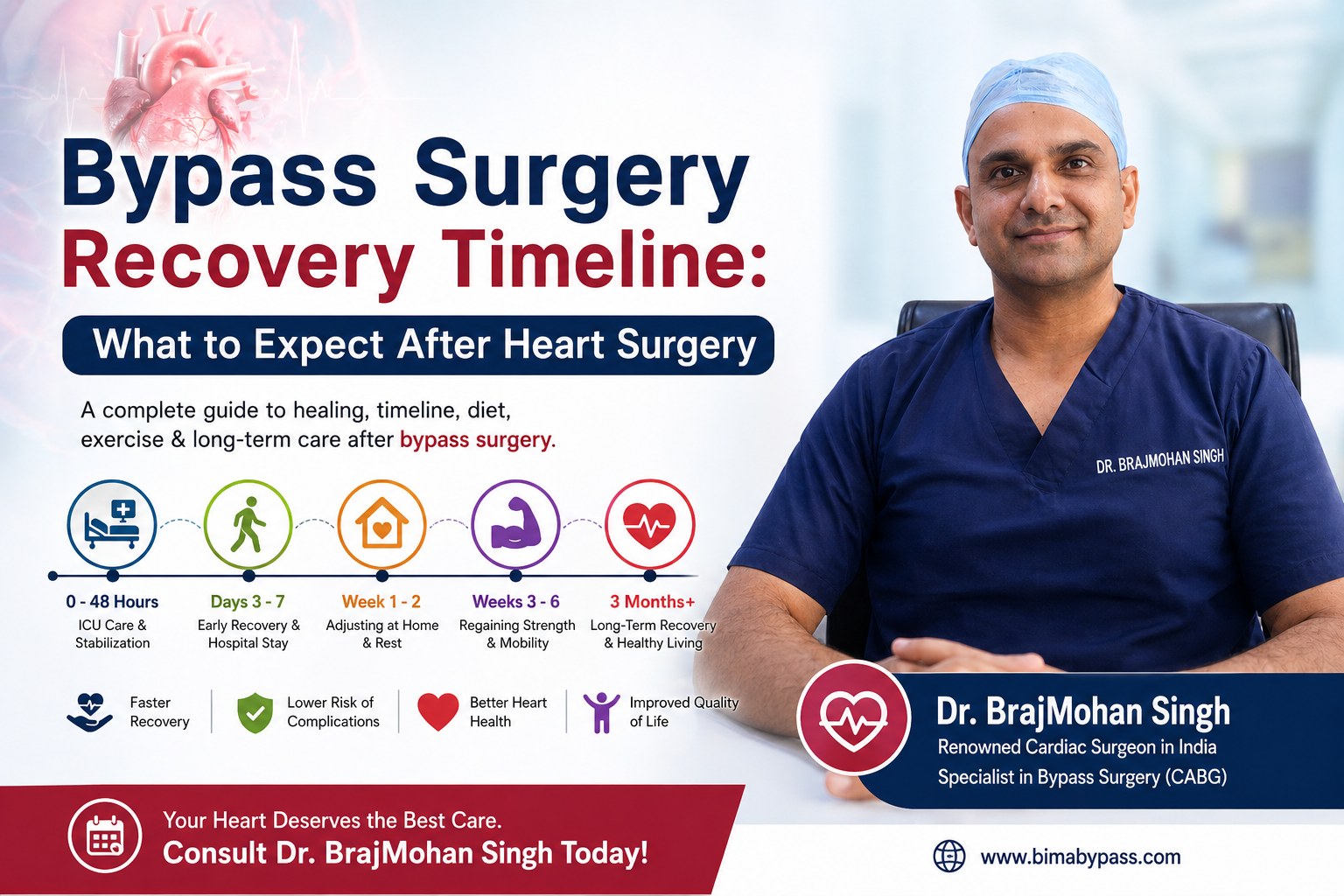
What Happens Immediately After Bypass Surgery? (First 24 – 48 Hours)
Right after surgery, patients are moved to the Intensive Care Unit (ICU). This is the most closely monitored phase of recovery.
During this time:
- You may be on a ventilator to assist breathing
- Tubes and monitors will track heart rate, oxygen levels, and blood pressure
- Pain and discomfort are managed with medication
It can feel overwhelming, but every beep and wire is part of a carefully orchestrated healing process.
Most patients regain consciousness within a few hours and begin breathing independently within 24 hours.
Days 3 – 7: Early Hospital Recovery Phase
As your body stabilizes, you’ll be moved out of the ICU to a regular hospital room.
What to expect:
- Gradual removal of tubes and monitoring devices
- Encouragement to sit, stand, and walk short distances
- Breathing exercises to prevent lung complications
- Mild pain or tightness in the chest
Walking might feel like climbing a mountain at first, but each step is a quiet victory.
Doctors typically discharge patients within 5 to 7 days, depending on recovery progress.
Week 1- 2 After Discharge: Adjusting at Home
Returning home is comforting, but it comes with new responsibilities.
Common experiences:
- Fatigue and low energy
- Mild swelling in legs or incision areas
- Difficulty sleeping
- Emotional ups and downs
Care tips:
- Take prescribed medications regularly
- Keep surgical wounds clean and dry
- Avoid lifting heavy objects
- Follow a heart-healthy diet
This phase is about patience. Your body is still stitching itself back together internally.
Weeks 3 – 6: Regaining Strength and Mobility
Now the fog begins to lift. Energy levels slowly improve, and daily activities become easier.
Progress you may notice:
- Increased stamina
- Reduced pain
- Improved appetite
- Better sleep patterns
Recommended activities:
- Light walking (10 – 20 minutes daily)
- Gentle stretching
- Breathing exercises
Many patients also begin cardiac rehabilitation programs, which are structured exercise and education plans designed to strengthen the heart safely.
After 6 – 8 Weeks: Returning to Normal Life
By this stage, most patients feel significantly better.
You may be able to:
- Resume light work (depending on your job)
- Drive again (with doctor approval)
- Increase physical activity
However, recovery is not a race. Even if you feel better, your heart is still healing beneath the surface.
3 Months and Beyond: Long-Term Recovery
This is where transformation truly happens.
Focus areas:
- Maintaining a heart-healthy lifestyle
- Regular exercise
- Stress management
- Routine medical check-ups
Patients who follow proper lifestyle changes often experience improved quality of life compared to before surgery.
Diet After Bypass Surgery: Fueling Your Recovery
Food becomes your daily medicine.
Recommended foods:
- Fresh fruits and vegetables
- Whole grains
- Lean proteins (fish, chicken, legumes)
- Nuts and seeds
Foods to avoid:
- Fried and oily foods
- Processed snacks
- Excess salt and sugar
- Red meat (limit intake)
A balanced diet helps prevent future blockages and keeps your heart strong.
Exercise After Bypass Surgery: Moving Safely
Exercise is essential, but it must be gradual and guided.
Safe activities:
- Walking
- Light yoga
- Breathing exercises
Avoid:
- Heavy lifting
- High-intensity workouts (initially)
- Sudden strenuous movements
Think of exercise as tuning an instrument, not hammering it.
Emotional Recovery: The Silent Journey
Physical healing is only half the story.
Many patients experience:
- Anxiety
- Depression
- Fear of recurrence
This is completely normal.
Talking to family, joining support groups, or consulting a professional can make a huge difference. Healing the mind is just as important as healing the heart.
Warning Signs After Bypass Surgery (Don’t Ignore These)
While most recover smoothly, certain symptoms require immediate medical attention:
- Chest pain similar to pre-surgery pain
- Shortness of breath
- Fever or signs of infection
- Irregular heartbeat
- Swelling that doesn’t improve
If you notice any of these, contact your doctor immediately.
Lifestyle Changes After Bypass Surgery
Surgery treats the symptom, not the root cause. Long-term health depends on your habits.
Key changes:
- Quit smoking
- Maintain a healthy weight
- Manage blood pressure and cholesterol
- Reduce stress
Your lifestyle becomes your strongest medicine.
Expert Advice from Dr. BrajMohan Singh
According to Dr. BrajMohan Singh, successful recovery after bypass surgery depends on three pillars:
- Consistency in medication and follow-ups
- Adopting a heart-healthy lifestyle
- Staying physically active within safe limits
He emphasizes that recovery is not just about survival, but about returning to a healthier, more active life.
FAQs About Bypass Surgery Recovery
1. How long does it take to fully recover from bypass surgery?
Most patients recover within 6 to 12 weeks, but full recovery can take up to 3 months or longer, depending on health conditions.
2. Can I live a normal life after bypass surgery?
Yes, many patients live longer and healthier lives after surgery, especially with proper lifestyle changes.
3. When can I start walking after surgery?
Walking usually begins within a few days after surgery under supervision.
4. Is pain normal after bypass surgery?
Mild to moderate pain is normal and gradually decreases over time.
Conclusion: A New Beginning for Your Heart
Bypass surgery is not the end of your health journey it’s a reset button.
Recovery may feel slow at times, but each day brings progress. With the right care, guidance, and mindset, you can return to a full, active, and healthy life.
If you or your loved one is preparing for or recovering from bypass surgery, expert guidance matters.
Visit https://bimabypass.com/ to learn more and connect with experienced specialists like Dr. BrajMohan Singh.