
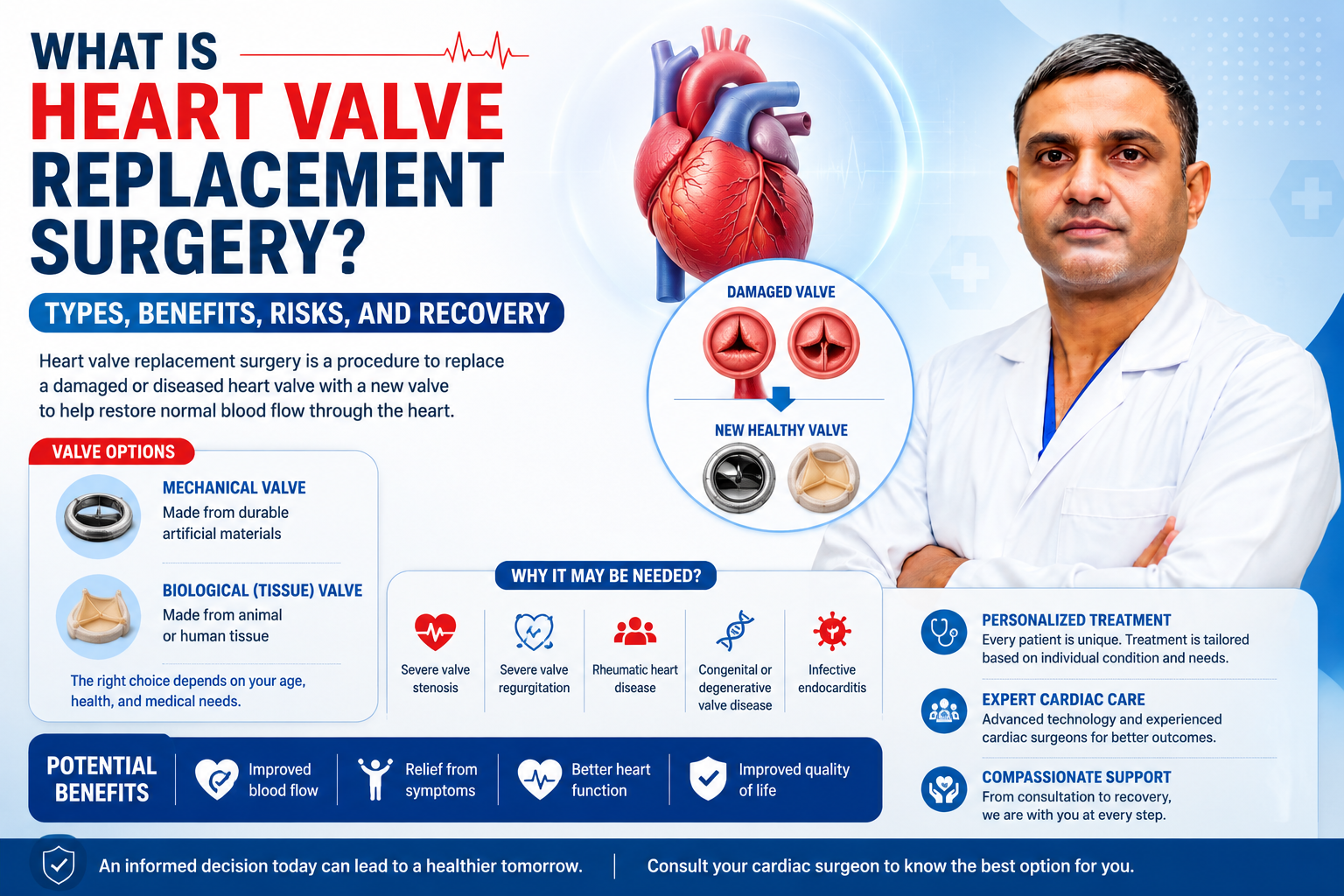
Heart valve replacement surgery is a cardiac procedure used to replace a damaged or diseased heart valve that is not functioning properly. A healthy heart valve helps blood flow in the correct direction through the heart. When a valve becomes narrowed or does not close properly, it can affect the heart’s ability to pump blood efficiently.
Depending on the patient’s condition, a damaged heart valve may be replaced with a mechanical valve or a biological (tissue) valve. The appropriate type of valve and surgical approach depend on factors such as the affected heart valve, the severity of the condition, the patient’s age, overall health, and individual medical needs.
If you or a family member has been advised to consider valve replacement surgery, understanding the procedure, available options, potential benefits, risks, and recovery process can help you have a more informed discussion with your cardiac surgeon.
Quick Answer: What Is Heart Valve Replacement Surgery?
Heart valve replacement surgery is a procedure in which a damaged, diseased, or poorly functioning heart valve is replaced with a new valve to help restore normal blood flow through the heart.
The replacement valve may be:
- A mechanical heart valve, made from durable artificial materials
- A biological or tissue valve, made from animal or human tissue
The decision about which valve is appropriate depends on the patient’s medical condition and other individual factors. A cardiac surgeon or heart team evaluates the patient before recommending the most suitable treatment option.
What Does a Heart Valve Do?
The heart has four valves:
- Aortic valve
- Mitral valve
- Tricuspid valve
- Pulmonary valve
These valves open and close as the heart beats. Their primary function is to help ensure that blood flows through the heart in the correct direction.
When a heart valve is damaged or diseased, it may not open fully or close properly. This can interfere with normal blood circulation.
Two common types of valve problems are:
Valve Stenosis
Stenosis occurs when a heart valve becomes narrowed or stiff. The narrowed valve makes it more difficult for blood to pass through.
Valve Regurgitation
Regurgitation occurs when a valve does not close properly, allowing some blood to flow backward.
Depending on the severity of the condition, valve disease may be treated with medication, monitoring, valve repair, or valve replacement.
Why Is Heart Valve Replacement Surgery Needed?
Heart valve replacement surgery may be recommended when a valve is severely damaged or diseased and is affecting the heart’s function or causing significant symptoms.
Some common conditions that may lead to valve replacement include:
- Severe aortic valve stenosis
- Severe mitral valve disease
- Significant valve regurgitation
- Rheumatic heart valve disease
- Congenital heart valve abnormalities
- Degenerative valve disease
- Certain cases of infective endocarditis
- Previously replaced or repaired valves that are no longer functioning properly
Not every patient with valve disease needs replacement surgery.
The decision depends on factors such as:
- Severity of valve disease
- Symptoms
- Heart function
- Age
- Overall health
- Other medical conditions
- Results of cardiac imaging
- Risk associated with surgery
- The expected benefits of treatment
A cardiac surgeon and heart team can evaluate these factors and recommend an appropriate treatment plan.
Which Heart Valves Can Be Replaced?
Valve replacement surgery can be performed for different heart valves depending on the patient’s condition.
Aortic Valve Replacement
The aortic valve controls blood flow from the left ventricle into the aorta.
Aortic valve disease may include:
- Aortic stenosis
- Aortic regurgitation
- Aortic valve disease caused by congenital abnormalities
Treatment options may include surgical aortic valve replacement or, in selected patients, a catheter-based procedure such as TAVR.
The most appropriate treatment depends on the patient’s age, anatomy, health, and overall risk profile.
Mitral Valve Replacement
The mitral valve is located between the left atrium and left ventricle.
Mitral valve disease may occur due to:
- Mitral stenosis
- Mitral regurgitation
- Degenerative valve disease
- Rheumatic heart disease
- Other structural abnormalities
When repair is not suitable or is unlikely to provide an appropriate long-term result, mitral valve replacement may be considered.
Tricuspid Valve Replacement
Tricuspid valve disease is less commonly treated with replacement than aortic or mitral valve disease.
In selected cases of severe tricuspid valve disease, valve repair or replacement may be considered depending on the underlying condition and the patient’s overall health.
Pulmonary Valve Replacement
Pulmonary valve replacement may be required in selected patients with congenital heart disease or other conditions affecting the pulmonary valve.
The treatment approach depends on the specific diagnosis and the patient’s individual circumstances.
What Are the Types of Heart Valve Replacement?
There are two main types of replacement valves:
- Mechanical valves
- Biological or tissue valves
The choice between these options is an important decision that should be discussed carefully with the cardiac surgeon.
Mechanical Heart Valve
A mechanical valve is made from durable artificial materials and is designed to provide long-term valve function.
Potential advantages
- High durability
- Long functional lifespan
- May be suitable for some younger patients
Important consideration
Patients with mechanical heart valves generally require lifelong anticoagulation medication to reduce the risk of blood clots.
The need for long-term anticoagulation should be carefully considered when choosing a mechanical valve.
Biological or Tissue Heart Valve
A biological valve, also called a tissue valve, is made from biological tissue.
Potential advantages
- Usually does not require lifelong anticoagulation solely because of the valve itself
- May be preferred in certain patients based on age, lifestyle, medical condition, or other factors
Important consideration
Tissue valves may not last as long as mechanical valves and may eventually require another intervention depending on the patient’s age and the valve’s durability.
Mechanical vs Tissue Valve: What Is the Difference?
The choice between a mechanical and tissue valve depends on several individual factors.
| Feature | Mechanical Valve | Tissue Valve |
| Material | Artificial materials | Biological tissue |
| Durability | Generally very durable | May have a limited lifespan |
| Long-term anticoagulation | Usually required | Usually not required solely because of the valve |
| Re-intervention | Less likely due to structural valve deterioration | May be more likely over time |
| Patient suitability | Depends on age and medical factors | Depends on age and medical factors |
There is no single valve type that is best for every patient.
Your cardiac surgeon will consider your age, lifestyle, medical history, ability to take anticoagulation medication, pregnancy considerations when relevant, and other factors before recommending a valve.
How Is Heart Valve Replacement Surgery Performed?
Traditional surgical heart valve replacement is performed under general anesthesia.
During surgery, the cardiac surgery team accesses the heart and replaces the diseased valve with the selected replacement valve.
In many traditional open-heart procedures, a heart-lung bypass machine is used to maintain blood circulation and oxygenation during the operation.
The exact procedure depends on:
- Which valve is being replaced
- The severity of the disease
- The type of replacement valve
- The patient’s anatomy
- The surgical approach
- The patient’s overall health
The surgical team will explain the planned procedure before surgery.
Is Minimally Invasive Valve Replacement Possible?
In selected patients, heart valve surgery may be performed using minimally invasive surgical techniques.
These approaches may involve smaller incisions compared with traditional open-heart surgery.
However, minimally invasive surgery is not suitable for every patient.
The decision depends on:
- The type of valve disease
- The valve being treated
- The patient’s anatomy
- Previous surgeries
- Overall health
- The surgeon’s assessment
For some patients with aortic valve disease, a catheter-based procedure such as Transcatheter Aortic Valve Replacement (TAVR) may be considered instead of traditional surgical valve replacement.
The best treatment approach should be determined by a qualified heart team after a complete evaluation.
What Are the Benefits of Heart Valve Replacement Surgery?
The potential benefits of valve replacement surgery depend on the underlying valve disease and the patient’s overall health.
Successful treatment may help:
- Improve blood flow through the heart
- Reduce symptoms caused by severe valve disease
- Improve the heart’s function in appropriate patients
- Improve quality of life
- Reduce the impact of severe valve disease on the heart
However, the expected benefits vary between patients.
The purpose of surgery is to address the specific valve problem and improve the patient’s overall cardiac health as much as possible.
What Are the Risks of Heart Valve Replacement Surgery?
Like any major surgery, heart valve replacement carries potential risks.
These may include:
- Bleeding
- Infection
- Blood clots
- Stroke
- Abnormal heart rhythms
- Reactions to anesthesia
- Kidney complications
- Lung complications
- Problems related to the replacement valve
- Need for additional treatment or surgery
The level of risk varies depending on:
- Age
- Overall health
- Heart function
- Kidney function
- Diabetes
- Lung disease
- Type of valve surgery
- Urgency of the procedure
- Previous heart surgery
Your cardiac surgeon will discuss the potential risks and benefits before recommending surgery.
How Long Does Heart Valve Replacement Surgery Take?
The duration of heart valve replacement surgery varies depending on:
- The valve being replaced
- The complexity of the procedure
- Whether additional cardiac procedures are performed
- The patient’s medical condition
- The surgical approach
Instead of relying on a fixed time estimate, patients should ask their cardiac surgery team for an individualized explanation based on their planned procedure.
What Is Recovery Like After Heart Valve Replacement Surgery?
Recovery after valve replacement surgery is different for every patient.
After surgery, patients generally spend time in the intensive care unit before moving to a regular hospital room.
The recovery process may include:
- Monitoring heart function
- Managing pain
- Monitoring the replacement valve
- Gradually increasing physical activity
- Breathing exercises
- Medication management
- Follow-up appointments
- Cardiac rehabilitation when recommended
The overall recovery period depends on the patient’s health, the type of surgery, and whether complications occur.
Your surgeon will provide personalized instructions about activity, medications, wound care, diet, and follow-up.
What Happens After Valve Replacement Surgery?
Valve replacement is not the end of cardiac care.
Patients may require ongoing follow-up to monitor:
- Heart function
- Valve function
- Blood pressure
- Cholesterol
- Blood sugar
- Medication use
- Anticoagulation when applicable
Patients with mechanical valves generally require regular monitoring of anticoagulation.
Patients with tissue valves may also require periodic imaging and follow-up to assess valve function over time.
A heart-healthy lifestyle can also be an important part of long-term cardiac care.
How Do You Choose a Valve Replacement Surgeon in Gujarat?
If you are looking for a valve replacement surgeon in Gujarat, consider more than online rankings or the word “best.”
Important factors may include:
1. Qualifications and Training
Review the surgeon’s medical qualifications, specialty training, and professional background.
2. Experience in Cardiac Surgery
Ask about the surgeon’s experience with cardiac surgery and the specific valve procedure being considered.
3. Experience With Your Condition
Valve disease can vary significantly between patients. Ask whether the surgeon regularly treats your specific type of valve condition.
4. Hospital Facilities
Cardiac surgery requires a coordinated team and access to appropriate intensive care and diagnostic facilities.
5. Multidisciplinary Heart Team
Complex valve cases may involve cardiac surgeon, cardiologists, anesthesiologists, intensivists, imaging specialists, and other healthcare professionals.
6. Follow-Up Care
Ask about post-operative follow-up, medication management, rehabilitation, and long-term monitoring.
The right surgeon and treatment approach should be selected based on your individual medical needs.
Questions to Ask Your Valve Replacement Surgeon
Before deciding on surgery, consider asking:
- Why do I need valve replacement?
- Can my valve be repaired instead of replaced?
- Which valve is recommended for me?
- Should I choose a mechanical or tissue valve?
- What are the benefits and risks of each option?
- Is minimally invasive surgery suitable for me?
- Is TAVR an option in my case?
- How long will I stay in the hospital?
- What will my recovery involve?
- Will I need long-term medication?
- Will I need cardiac rehabilitation?
- How often will I need follow-up appointments?
A detailed discussion can help you understand your treatment options and make an informed decision with your medical team.
Dr. Brajmohan Singh and Cardiac Surgical Care
Dr. Brajmohan Singh is a cardiac and cardiothoracic surgeon associated with cardiac surgical care and advanced cardiac procedures.
According to information provided by his practice, Dr. Brajmohan Singh has 6000+ successful surgeries and 15+ years of experience.
Patients who have been diagnosed with heart valve disease and are considering surgery can discuss their condition, diagnostic reports, treatment options, and surgical approach with a qualified cardiac surgeon.
The appropriate treatment depends on the patient’s individual diagnosis and should be determined after a comprehensive medical evaluation.
Heart Valve Replacement Surgery in Gujarat
Patients searching for heart valve replacement surgery in Gujarat may consider consulting an experienced cardiac surgery team for a detailed evaluation.
A consultation can help determine:
- Which heart valve is affected
- How severe the valve disease is
- Whether valve repair is possible
- Whether valve replacement is required
- Which type of replacement valve may be appropriate
- Whether minimally invasive surgery is an option
- Whether a catheter-based procedure may be considered
- What recovery may involve
The best treatment approach is different for every patient.
Frequently Asked Questions About Heart Valve Replacement Surgery
What is heart valve replacement surgery?
Heart valve replacement surgery is a procedure used to replace a damaged or diseased heart valve with a mechanical or biological valve to help restore proper blood flow through the heart.
Why is heart valve replacement surgery needed?
Valve replacement may be recommended when a heart valve is severely narrowed or leaking and is affecting the heart’s function or causing significant symptoms.
Which heart valves can be replaced?
The aortic, mitral, tricuspid, and pulmonary valves can all be replaced in appropriate clinical situations.
What are the two main types of replacement valves?
The two main types are mechanical valves and biological or tissue valves.
Is a mechanical valve better than a tissue valve?
Neither is universally better. The choice depends on factors such as age, medical history, lifestyle, ability to take anticoagulants, and individual treatment considerations.
How long do mechanical heart valves last?
Mechanical valves are designed to be highly durable and can function for many years. However, patients generally require lifelong anticoagulation and regular medical monitoring.
How long do tissue heart valves last?
The lifespan of a tissue valve varies depending on factors such as the patient’s age, valve type, and individual circumstances. Over time, some tissue valves may deteriorate and require another intervention.
Is heart valve replacement surgery safe?
Heart valve replacement is a major cardiac procedure and carries potential risks. The level of risk varies according to the patient’s health, age, type of valve disease, and complexity of surgery.
How long does it take to recover from valve replacement surgery?
Recovery varies from patient to patient. Factors such as the surgical approach, overall health, and presence of complications can affect the recovery timeline.
Can a heart valve be repaired instead of replaced?
In some cases, valve repair may be possible and may be preferred. Whether repair or replacement is appropriate depends on the type and severity of valve disease.
Is minimally invasive valve surgery possible?
Minimally invasive valve surgery may be possible for selected patients. Suitability depends on the valve condition, anatomy, overall health, and the surgical team’s assessment.
Is TAVR the same as surgical valve replacement?
No. TAVR is a catheter-based procedure used primarily for certain patients with aortic valve disease, while surgical valve replacement involves replacing the valve through a surgical procedure. The appropriate option depends on the patient’s individual condition.
How do I choose a heart valve replacement surgeon in Gujarat?
Consider the surgeon’s qualifications, experience with your specific valve condition, hospital facilities, multidisciplinary cardiac team, and approach to post-operative care. A consultation can help you understand your treatment options.
Conclusion
Heart valve replacement surgery is a procedure used to replace a damaged or diseased heart valve when the valve is no longer functioning properly, and treatment is required. Depending on the patient’s condition, the replacement may involve a mechanical or biological valve.
The decision to undergo valve replacement surgery and the choice of valve should be based on a detailed evaluation of the patient’s heart condition, overall health, age, lifestyle, and individual medical needs.
If you or a family member has been diagnosed with heart valve disease, speak with a qualified cardiac surgeon or heart team to understand whether valve repair, valve replacement, minimally invasive surgery, or another treatment option may be appropriate.
For patients considering cardiac surgical treatment, Dr. Brajmohan Singh provides cardiac surgical consultation based on individual patient needs and clinical evaluation.
If you or a family member has been diagnosed with heart valve disease, schedule a consultation with Dr. Brajmohan Singh to discuss your diagnosis and available treatment options.