Heart disease remains one of the leading causes of death worldwide, and coronary artery disease (CAD) is at the center of it. When arteries supplying blood to the heart become blocked, bypass surgery often becomes necessary. But not all bypass surgeries are created equal.
In recent years, BIMA Bypass Surgery (Bilateral Internal Mammary Artery Bypass) has emerged as the gold standard in advanced cardiac care. Patients today are no longer just asking for surgery they are asking for the best technique and the best surgeon.
If you’re searching for the best BIMA bypass surgeon in Gujarat, this guide will walk you through everything you need to know from the procedure itself to how to choose the right expert like Dr. Brajmohan Singh.
What Is BIMA Bypass Surgery?
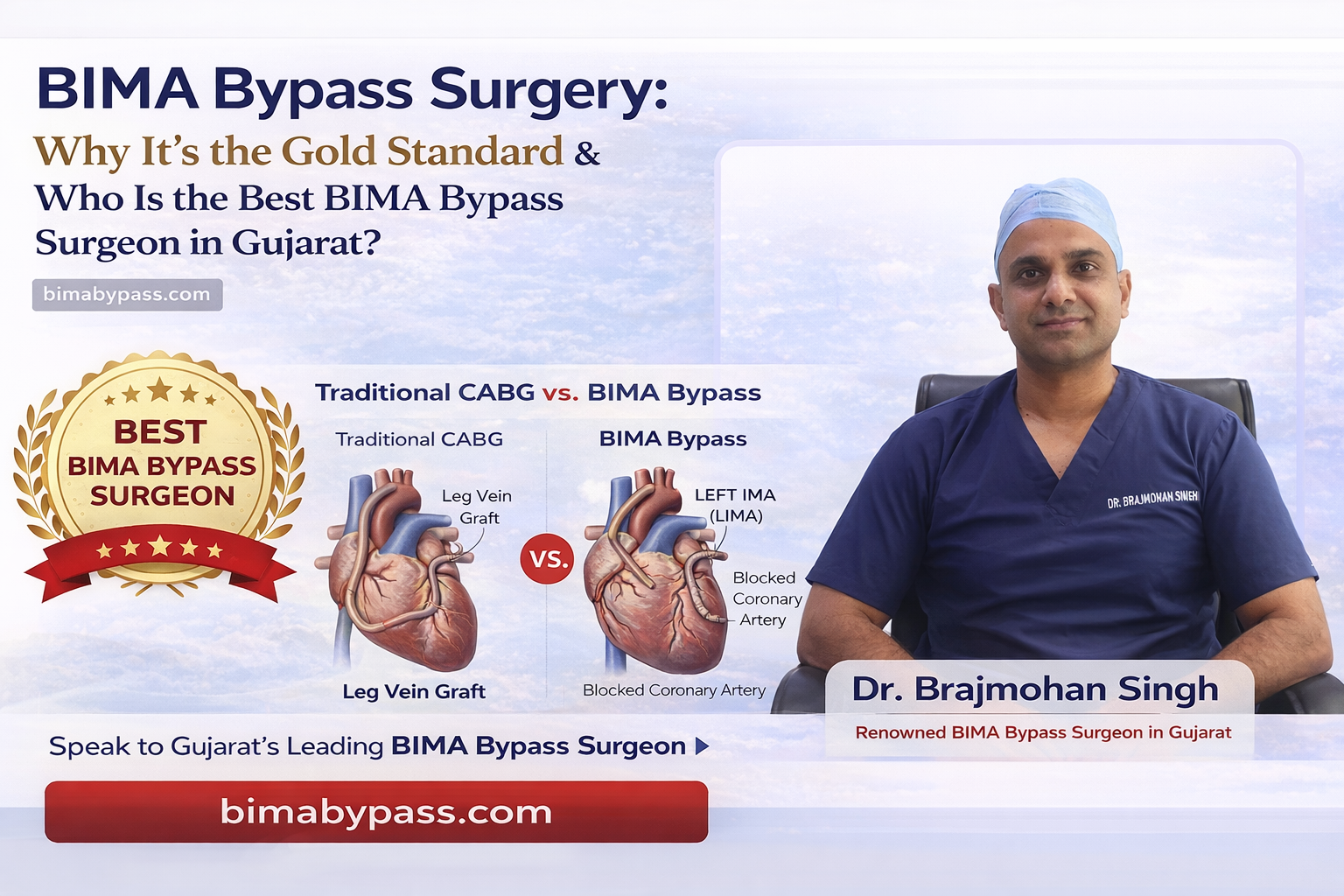
BIMA stands for Bilateral Internal Mammary Artery bypass. In this advanced surgical technique, both internal mammary arteries (left and right) are used to bypass blocked coronary arteries.
Traditional Bypass vs BIMA
- Traditional CABG (Coronary Artery Bypass Grafting):
Uses one internal mammary artery + veins from the leg - BIMA Bypass Surgery:
Uses both mammary arteries, which are more durable and long-lasting
Why This Matters
Arteries are naturally designed to handle high-pressure blood flow, unlike veins. This makes BIMA grafts:
- More durable
- Less prone to blockage
- Better for long-term survival
Why BIMA Bypass Surgery Is the Gold Standard
Let’s be clear: BIMA isn’t just another option it’s often considered the best bypass surgery technique available today.
1. Superior Long-Term Results
Studies show that patients undergoing BIMA bypass have better survival rates over 10–20 years compared to traditional methods.
2. Lower Risk of Re-Blockage
Arterial grafts resist plaque buildup much better than vein grafts. This means:
- Fewer repeat procedures
- Better quality of life
3. Ideal for Younger Patients
If a patient is relatively young or has a longer life expectancy, BIMA provides a more permanent solution.
4. Better Heart Function
Improved blood flow leads to:
- Stronger heart performance
- Reduced chest pain (angina)
- Increased stamina
Who Needs BIMA Bypass Surgery?
Not every patient requires BIMA, but it is highly recommended for:
- Patients with multi-vessel coronary artery disease
- Younger patients (below 65)
- Diabetic patients (in selected cases)
- Patients seeking long-term durability
- Those wanting to avoid repeat surgeries
Important Note:
The success of BIMA surgery heavily depends on the skill and experience of the surgeon.
What Makes a Surgeon the Best BIMA Bypass Surgeon in Gujarat?
Choosing the right surgeon is not just important—it’s critical. BIMA bypass is technically demanding and requires a high level of expertise.
Key Factors to Consider
1. Specialization in CTVS
Look for a surgeon specialized in:
- Cardiovascular and Thoracic Surgery (CTVS)
- Advanced bypass techniques like BIMA and Total Arterial Grafting (TAG)
2. Experience in BIMA Procedures
Not all cardiac surgeons perform BIMA regularly. The best surgeon will have:
- Extensive hands-on experience
- High success rates
3. Expertise in Advanced Techniques
A top surgeon should also be skilled in:
- Minimally Invasive Cardiac Surgery (MICS)
- LIMA-RIMA Y grafting
- Total arterial bypass
4. Patient Outcomes & Trust
- Low complication rates
- Positive patient feedback
- Transparent communication
Why Dr. Brajmohan Singh Is Considered One of the Best BIMA Bypass Surgeons in Gujarat
When it comes to advanced cardiac care, Dr. Brajmohan Singh stands out as a trusted name in Gujarat.
Expertise That Matters
Dr. Singh is known for:
- Advanced BIMA bypass surgery
- Total arterial revascularization techniques
- Complex cardiac procedures with high precision
Patient-Centric Approach
Patients value:
- Clear explanations of treatment options
- Ethical medical practices
- Personalized care plans
Focus on Advanced Techniques
Dr. Singh emphasizes:
- Long-term outcomes over short-term fixes
- Use of arterial grafts for better durability
- Minimally invasive approaches where possible
BIMA Bypass Surgery Procedure: Step-by-Step
Understanding the process helps reduce fear and builds confidence.
Step 1: Pre-Surgery Evaluation
- Angiography to assess blockages
- Blood tests and imaging
- Overall health evaluation
Step 2: Anesthesia and Preparation
The patient is placed under general anesthesia.
Step 3: Harvesting the Arteries
Both internal mammary arteries are carefully prepared for grafting.
Step 4: Bypass Creation
The surgeon connects these arteries to bypass blocked coronary arteries.
Step 5: Heart Function Restoration
Blood flow is restored, improving oxygen supply to the heart.
Step 6: Closure and Recovery
The chest is closed, and the patient is shifted to ICU for monitoring.
Recovery After BIMA Bypass Surgery
Recovery is gradual but rewarding.
Hospital Stay
- Typically 5 – 7 days
Initial Recovery
- Mild pain and discomfort
- Gradual movement and breathing exercises
Full Recovery Timeline
- 6 – 12 weeks for normal activities
Lifestyle Changes
- Healthy diet
- Regular exercise
- Medication adherence
Risks and Safety of BIMA Bypass Surgery
Every surgery has risks, but in experienced hands, BIMA is highly safe.
Possible Risks
- Infection
- Bleeding
- Wound healing issues
Risk Reduction
Choosing an expert like Dr. Brajmohan Singh significantly reduces complications.
Cost of BIMA Bypass Surgery in Gujarat
The cost can vary depending on:
- Hospital facilities
- Complexity of the case
- Surgeon’s expertise
Average Range:
₹2.5 lakh to ₹5 lakh (approx.)
While cost matters, quality and expertise should never be compromised.
Why Gujarat Is a Preferred Destination for Cardiac Surgery
Gujarat, especially Ahmedabad, has become a hub for advanced cardiac care due to:
- Highly skilled surgeons
- Advanced hospitals
- Affordable treatment compared to metro cities
Why Choose bimabypass.com?
If you’re researching BIMA surgery, bimabypass.com is a dedicated platform designed to:
- Educate patients about advanced cardiac procedures
- Provide accurate, reliable information
- Connect you with expert care under Dr. Brajmohan Singh
Frequently Asked Questions (FAQs)
Is BIMA bypass better than normal bypass surgery?
Yes, BIMA bypass offers better long-term results, lower re-blockage rates, and improved survival compared to traditional bypass surgery.
Who is the best BIMA bypass surgeon in Gujarat?
Dr. Brajmohan Singh is widely recognized for his expertise in BIMA bypass and advanced cardiac surgery techniques.
What is the success rate of BIMA bypass surgery?
The success rate is very high, especially when performed by experienced surgeons, with excellent long-term outcomes.
Is BIMA surgery risky?
Like all surgeries, it has risks, but in expert hands, it is safe and highly effective.
How long does BIMA bypass surgery take?
Typically, the surgery lasts 4 – 6 hours depending on complexity.
What is the recovery time after BIMA surgery?
Most patients recover within 6 – 12 weeks.
Final Thoughts
BIMA Bypass Surgery represents the future of cardiac care focused on durability, long-term survival, and improved quality of life.
But the outcome depends not just on the procedure, but on who performs it.
If you’re looking for the best BIMA bypass surgeon in Gujarat, choosing an experienced and trusted expert like Dr. Brajmohan Singh can make all the difference.
For more information and expert consultation, visit: https://bimabypass.com