
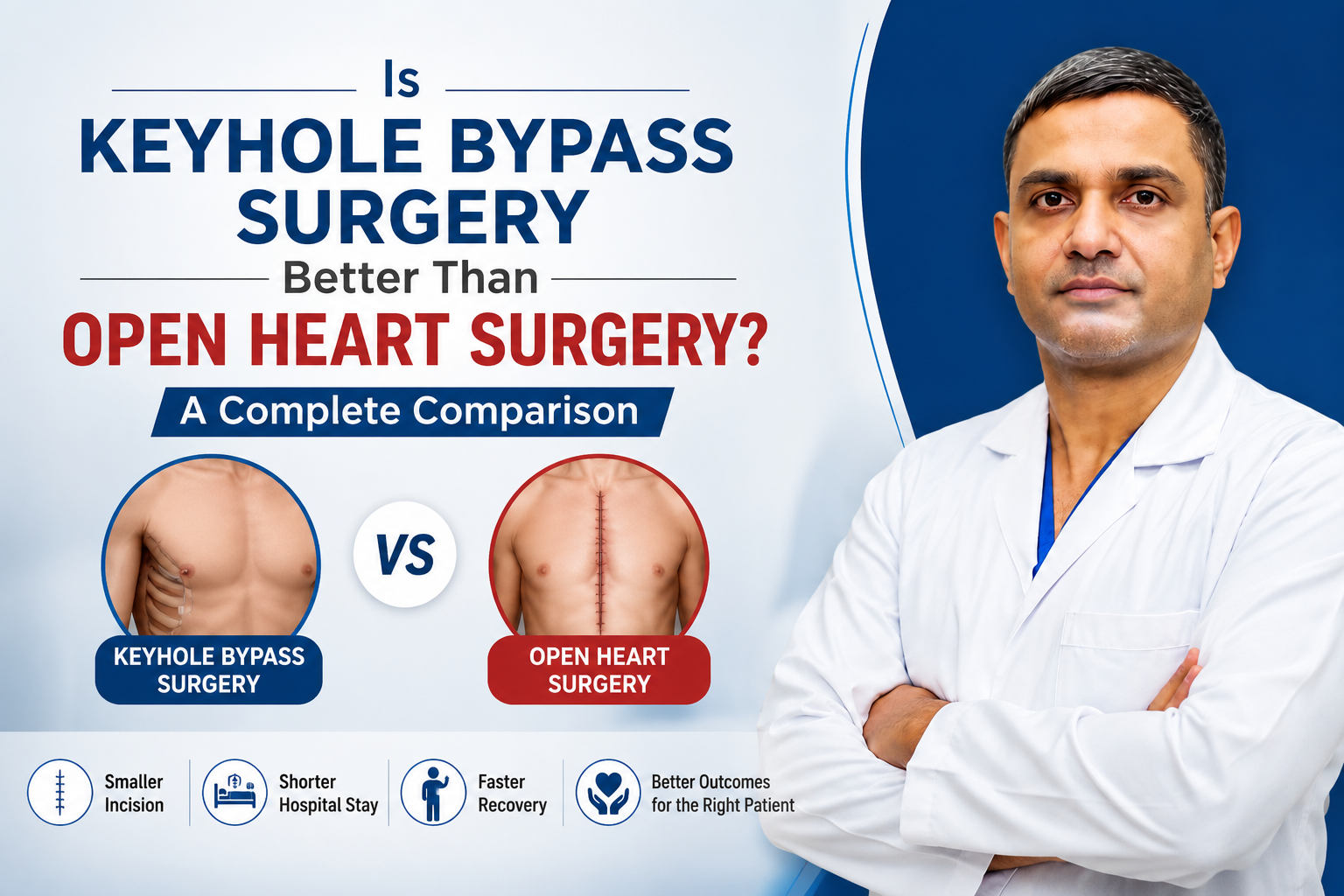
Is Keyhole Bypass Surgery Better Than Open Heart Surgery?
When a patient is advised to undergo heart bypass surgery, one of the most common questions is:
“Can I have keyhole bypass surgery instead of traditional open heart surgery?”
With advances in cardiac surgery, many patients are now exploring minimally invasive techniques that may reduce pain, shorten recovery, and leave a smaller scar. One such option is keyhole bypass surgery, a minimally invasive approach that avoids the traditional full breastbone incision in carefully selected patients.
However, keyhole bypass surgery is not automatically better than open heart surgery for everyone. The most appropriate procedure depends on factors such as the number of blocked arteries, the location of the blockages, your overall health, and the complexity of your heart condition.
In this guide, we’ll compare keyhole bypass surgery and traditional open heart surgery, explain how each procedure is performed, discuss their benefits and limitations, and help you understand which approach may be suitable for different types of patients.
Understanding Heart Bypass Surgery
Heart bypass surgery, also known as Coronary Artery Bypass Grafting (CABG), is performed to restore blood flow to the heart muscle when coronary arteries become narrowed or blocked.
During the procedure, the surgeon creates a new pathway around blocked arteries using healthy blood vessels taken from another part of the body. This allows oxygen-rich blood to reach the heart muscle more effectively, helping relieve symptoms such as chest pain and reducing the risk of future cardiac events.
Depending on the patient’s condition, bypass surgery may be performed through a traditional open-heart approach or a minimally invasive keyhole approach.
What Is Keyhole Bypass Surgery?
Keyhole bypass surgery is a minimally invasive form of coronary artery bypass surgery performed through a small incision between the ribs rather than opening the breastbone.
Instead of making a long incision down the center of the chest, the surgeon accesses the heart through a carefully planned opening on the side of the chest. Special instruments and advanced surgical techniques allow the procedure to be completed while minimizing trauma to surrounding tissues.
Potential advantages for suitable patients include:
- Smaller surgical incision
- Less disruption to the chest wall
- Reduced blood loss
- Less postoperative discomfort
- Faster recovery
- Shorter hospital stay
- Smaller scar
Not every patient is a candidate for this approach. Eligibility depends on detailed medical evaluation and imaging.
What Is Traditional Open Heart Surgery?
Traditional open heart bypass surgery has been the standard treatment for coronary artery disease for many decades.
In this procedure, the surgeon reaches the heart by dividing the breastbone (sternotomy), providing excellent visibility and access to all areas of the heart. This approach is especially valuable in patients with complex coronary artery disease or multiple blocked vessels.
Although recovery generally takes longer because the breastbone must heal, open heart surgery remains a highly effective and well-established treatment with excellent long-term outcomes for many patients.
Keyhole Bypass Surgery vs Open Heart Surgery: Major Differences
Although both procedures aim to improve blood flow to the heart, they differ in several important ways.
| Feature | Keyhole Bypass Surgery | Traditional Open Heart Surgery |
| Incision | Small incision between the ribs | Long incision through the breastbone |
| Breastbone | Usually not divided | Divided to access the heart |
| Surgical Access | Limited but targeted | Full access to the heart |
| Recovery | Often faster | Usually longer |
| Hospital Stay | May be shorter | Often longer |
| Postoperative Pain | Generally less | May be greater initially |
| Scar | Smaller | Larger midline chest scar |
| Suitable for Everyone | No | Yes, including many complex cases |
It is important to understand that these are general differences. Individual experiences vary based on the patient’s health, the complexity of the surgery, and the surgeon’s assessment.
Benefits of Keyhole Bypass Surgery
For carefully selected patients, keyhole bypass surgery offers several potential advantages.
Smaller Incision
One of the most noticeable differences is the smaller incision. Because the breastbone is typically not divided, there is less surgical trauma to the chest.
Faster Recovery
Many patients return to everyday activities sooner compared with traditional sternotomy, although recovery still requires careful medical supervision and varies from person to person.
Less Postoperative Discomfort
With less disruption to bone and surrounding tissues, some patients experience reduced postoperative pain and improved comfort during recovery.
Reduced Blood Loss
Minimally invasive techniques may reduce blood loss in selected cases, though this depends on the complexity of the procedure and individual patient factors.
Lower Risk of Sternal Complications
Avoiding a full breastbone incision may reduce the risk of certain complications related to sternal healing, particularly in appropriate candidates.
Cosmetic Benefits
Many patients appreciate the smaller, less visible scar associated with keyhole bypass surgery.
Benefits of Traditional Open Heart Surgery
Although minimally invasive techniques receive significant attention, traditional open heart surgery continues to be the preferred approach for many patients.
Excellent Surgical Access
A full sternotomy allows surgeons to clearly visualize the heart and perform complex procedures with precision.
Suitable for Complex Cases
Patients with extensive coronary artery disease, multiple blocked vessels, previous heart surgery, or combined valve and bypass procedures may benefit from the greater access provided by traditional surgery.
Long Track Record
Open heart bypass surgery has decades of clinical evidence supporting its effectiveness and remains one of the most commonly performed cardiac operations worldwide.
Versatility
Surgeons can address multiple heart conditions during the same operation when necessary, making this approach particularly valuable for complex treatment plans.
Who Is a Good Candidate for Keyhole Bypass Surgery?
Not everyone with coronary artery disease is eligible for minimally invasive bypass surgery.
A comprehensive evaluation helps determine whether this approach is appropriate. Factors considered may include:
- Number and location of blocked coronary arteries
- Overall heart function
- Previous heart surgeries
- Lung health
- Chest anatomy
- Other medical conditions such as diabetes or kidney disease
Patients with isolated blockages or specific patterns of coronary artery disease may be suitable candidates, while others may achieve better outcomes with conventional surgery.
Ultimately, the decision should be based on an individualized assessment by an experienced cardiothoracic surgeon.
Is Keyhole Bypass Surgery Better?
This is one of the most common questions patients ask, but there is no universal answer.
For the right patient, keyhole bypass surgery may offer meaningful benefits such as smaller incisions, quicker recovery, and less postoperative discomfort.
However, traditional open heart surgery remains the preferred option for many complex cases because it provides comprehensive access to the heart and allows surgeons to safely manage a wider range of cardiac conditions.
The goal is not to choose the newest technique, but to choose the approach that offers the safest and most effective treatment for your specific medical condition.
In the next section, we’ll explore recovery timelines, possible risks, long-term outcomes, success factors, frequently asked questions, and practical guidance to help you understand which option may be most appropriate for your situation.
Recovery After Keyhole Bypass Surgery vs Open Heart Surgery
Recovery is one of the biggest concerns for patients considering heart bypass surgery. While both procedures aim to improve blood flow to the heart, the healing process can differ because of the surgical approach used.
Recovery After Keyhole Bypass Surgery
Since keyhole bypass surgery is performed through a small incision without dividing the breastbone, many patients experience a smoother recovery.
Depending on the individual’s health and the complexity of the surgery, patients may benefit from:
- Shorter hospital stay
- Earlier walking and mobility
- Reduced discomfort around the incision
- Smaller surgical scar
- Faster return to light daily activities
- Earlier return to work for suitable occupations
However, recovery still requires patience. Patients should follow their surgeon’s advice regarding medications, wound care, physical activity, and follow-up appointments.
Recovery After Traditional Open Heart Surgery
Traditional bypass surgery involves opening the breastbone, which naturally requires additional healing time.
Recovery usually includes:
- A hospital stay for monitoring and rehabilitation
- Gradual increase in physical activity
- Temporary lifting restrictions while the breastbone heals
- Participation in cardiac rehabilitation, if recommended
- Regular follow-up visits
Although recovery is generally longer, many patients achieve excellent long-term outcomes and return to active lifestyles.
Does One Procedure Have a Better Success Rate?
Patients frequently ask whether keyhole bypass surgery has a higher success rate than traditional open heart surgery.
The answer depends on patient selection.
For carefully selected patients who are good candidates, keyhole bypass surgery can provide outcomes comparable to conventional bypass surgery while offering certain recovery-related advantages.
Traditional open heart surgery continues to be the preferred option for many patients with:
- Multiple blocked coronary arteries
- Complex coronary anatomy
- Combined heart valve disease
- Previous heart surgery
- Other conditions requiring extensive surgical access
Rather than asking which procedure is universally better, it is more useful to ask:
“Which procedure is better for my specific condition?”
That is the question your cardiothoracic surgeon is best equipped to answer after a detailed evaluation.
Lifestyle After Heart Bypass Surgery
Surgery treats blocked arteries, but long-term heart health depends on ongoing lifestyle choices.
After bypass surgery, patients are encouraged to:
Follow a Heart-Healthy Diet
Choose meals rich in vegetables, fruits, whole grains, legumes, lean protein, and healthy fats while limiting processed foods, excess salt, and saturated fats.
Stay Physically Active
Regular physical activity improves heart health, circulation, and overall fitness. Always follow your healthcare team’s recommendations regarding exercise intensity and timing.
Stop Smoking
Smoking damages blood vessels and significantly increases the risk of future heart disease. Quitting smoking is one of the most important steps patients can take after surgery.
Manage Chronic Conditions
Keep blood pressure, diabetes, and cholesterol under control through medication, regular monitoring, and healthy lifestyle habits.
Attend Follow-Up Appointments
Routine follow-up allows your healthcare team to monitor your recovery, adjust medications if needed, and identify any concerns early.
Why Choosing an Experienced Cardiothoracic Surgeon Matters
Whether a patient undergoes keyhole bypass surgery or traditional open heart surgery, the surgeon’s experience plays a vital role in planning and performing the procedure.
An experienced cardiothoracic surgeon evaluates:
- Your coronary anatomy
- Overall heart function
- Existing medical conditions
- Surgical risks
- The most appropriate treatment approach for your individual case
For some patients, minimally invasive surgery offers meaningful advantages. For others, conventional surgery provides the safest and most effective option.
The best treatment is always the one that aligns with your clinical needs rather than simply the newest technique.
Frequently Asked Questions
Is keyhole bypass surgery safer than open heart surgery?
Neither procedure is universally safer. Safety depends on your medical condition, the complexity of the surgery, and whether you are an appropriate candidate for a minimally invasive approach.
Is keyhole bypass surgery painful?
Some patients report less postoperative discomfort because the breastbone is typically not divided. Pain levels vary between individuals and are managed with appropriate medications.
Can everyone have keyhole bypass surgery?
No. Eligibility depends on several factors, including the location of coronary blockages, overall health, previous surgeries, and other medical considerations.
Which surgery has a shorter recovery time?
Patients undergoing keyhole bypass surgery may recover more quickly because of the smaller incision, but recovery timelines vary and should be discussed with your surgeon.
Does keyhole bypass surgery leave a scar?
Yes, but the incision is generally much smaller than the scar associated with a traditional sternotomy.
Is traditional bypass surgery still a good option?
Absolutely. Traditional open heart surgery remains the gold standard for many complex heart conditions and has an excellent track record.
Can elderly patients undergo keyhole bypass surgery?
Some older adults may be suitable candidates, but age alone does not determine eligibility. A comprehensive medical evaluation is essential.
Will I need cardiac rehabilitation?
Many patients benefit from cardiac rehabilitation after bypass surgery. These supervised programs support safe recovery through exercise, education, and lifestyle guidance.
Can bypass surgery cure heart disease?
Bypass surgery improves blood flow around blocked arteries, but it does not cure the underlying process of atherosclerosis. Long-term heart health depends on ongoing medical care and healthy lifestyle choices.
How do I know which procedure is right for me?
The most appropriate procedure is determined after a detailed evaluation by an experienced cardiothoracic surgeon, taking into account your heart condition, overall health, and treatment goals.
Conclusion
Both keyhole bypass surgery and traditional open heart surgery are highly effective treatments for coronary artery disease. Neither approach is inherently superior in every situation.
Keyhole bypass surgery may offer advantages such as a smaller incision, reduced postoperative discomfort, and a faster recovery for carefully selected patients. However, traditional open heart surgery remains the preferred and most appropriate option for many complex cases because it provides excellent access to the heart and supports a wide range of surgical procedures.
The decision should always be based on a comprehensive evaluation rather than personal preference or online information alone.
If you have been advised to undergo bypass surgery, consult an experienced cardiothoracic surgeon who can explain your options, discuss the benefits and limitations of each approach, and recommend the treatment best suited to your individual needs.