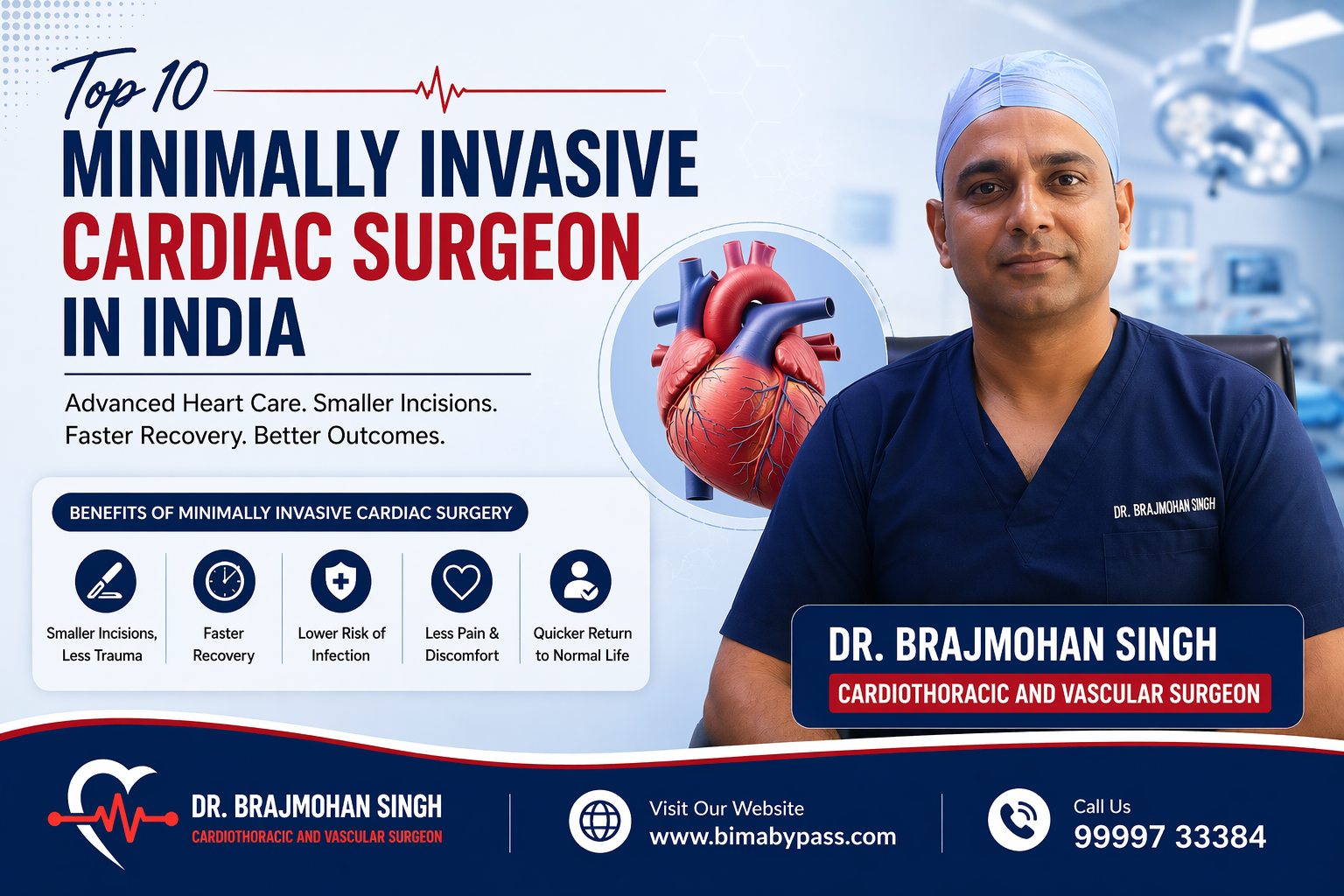
Heart surgery has long been associated with large incisions, extended recovery periods, and significant physical stress. But medicine, much like a skilled sculptor, keeps refining its craft. Today, Minimally Invasive Cardiac Surgery (MICS) has transformed the landscape of heart care, offering patients safer, faster, and more comfortable alternatives to traditional open-heart procedures.
India has emerged as a global hub for advanced cardiac care, with highly skilled surgeons leading the charge in minimally invasive techniques. Among these experts, Dr. Brajmohan Singh stands out for his expertise, innovation, and patient-centered approach. With a commitment to precision and compassion, he has helped countless patients reclaim their health with minimal disruption to their lives.
In this comprehensive guide, we will explore everything you need to know about MICS, including its types, benefits, and why choosing the right surgeon matters.
1) What Is Minimally Invasive Cardiac Surgery?
Minimally Invasive Cardiac Surgery (MICS) refers to a group of surgical techniques used to perform heart procedures through small incisions, typically between the ribs, rather than cutting through the breastbone (sternum) as in traditional open-heart surgery.
Think of it as repairing a complex engine through a carefully designed access panel instead of dismantling the entire machine. The heart is still the same intricate organ, but the approach is far less disruptive.
Key Features of MICS
- Small Incisions: Usually 2 – 4 inches in length
- No Sternotomy: The chest bone remains intact
- Specialized Instruments: Long, thin surgical tools and cameras
- Advanced Imaging: High-definition visualization for precision
- Optional Robotic Assistance: In some cases, robotic systems enhance accuracy
How It Works
During MICS, the surgeon accesses the heart through small openings between the ribs. A tiny camera (thoracoscope) provides a magnified view of the heart on a monitor, allowing the surgeon to perform complex procedures with exceptional precision.
In some cases, a heart-lung machine may still be used, while in others, surgeries are performed on a beating heart.
Conditions Treated with MICS
Minimally invasive techniques are used to treat a variety of cardiac conditions, including:
- Coronary artery disease (bypass surgery)
- Valve disorders (mitral, aortic, tricuspid)
- Congenital heart defects
- Atrial septal defects (ASD)
- Cardiac tumors
For more detailed insights into procedures, visit: https://bimabypass.com/mics-surgery/
2) What Are The Types Of Minimally Invasive Cardiac Surgery?
MICS is not a single procedure but a family of advanced surgical approaches, each tailored to specific heart conditions. Let’s explore the major types:
1. Minimally Invasive Direct Coronary Artery Bypass (MIDCAB)
MIDCAB is used to bypass blocked coronary arteries without opening the chest fully.
- Performed through a small incision on the left side of the chest
- Often done on a beating heart (off-pump)
- Ideal for single or limited artery blockages
This technique is particularly beneficial for patients who may not tolerate traditional surgery well.
2. Minimally Invasive Valve Surgery
Valve repair or replacement can now be performed through small incisions.
a) Mitral Valve Surgery
- One of the most common MICS procedures
- Accessed through the right side of the chest
- High success rates with faster recovery
b) Aortic Valve Surgery
- Performed via mini-sternotomy or small chest incision
- Used for aortic stenosis or regurgitation
c) Tricuspid Valve Surgery
- Often combined with mitral valve procedures
- Done using minimally invasive approaches
3. Robotic-Assisted Cardiac Surgery
This is where technology and human expertise dance in perfect sync.
- Surgeon controls robotic arms from a console
- Enhanced precision and flexibility
- Smaller incisions than traditional MICS
Robotic surgery is commonly used for valve repairs and certain bypass procedures.
4. Totally Endoscopic Cardiac Surgery (TECS)
In this advanced approach:
- No large incisions are made
- Entire procedure is done using endoscopic tools
- High-definition cameras guide the surgeon
This is one of the least invasive forms of heart surgery available today.
5. Minimally Invasive Atrial Septal Defect (ASD) Closure
ASD, a congenital hole in the heart, can be repaired using:
- Small incisions
- Specialized closure devices
- Reduced hospital stay
6. Hybrid Cardiac Procedures
Hybrid procedures combine:
- Minimally invasive surgery
- Interventional cardiology techniques (like stenting)
This approach is ideal for complex cases requiring multi-dimensional treatment.
7. Off-Pump Coronary Artery Bypass (OPCAB)
- Performed without stopping the heart
- Reduces complications associated with heart-lung machines
- Often combined with minimally invasive access
8. Mini-Thoracotomy Procedures
- Small incision between ribs
- Used for various cardiac interventions
- Less trauma compared to open surgery
9. Transcatheter Procedures (TAVR/TAVI)
Though technically not surgery, these are minimally invasive interventions:
- Valve replacement via catheter
- No incision in the chest
- Suitable for high-risk patients
10. Minimally Invasive Cardiac Tumor Removal
Rare but critical procedures where tumors are removed through:
- Small incisions
- Precise surgical techniques
3) What Are The Benefits Of Minimally Invasive Cardiac Surgery Over Open Heart Surgery?
If traditional open-heart surgery is like opening the front door wide, MICS is like slipping in through a side window with finesse and precision. The difference in patient experience can be remarkable.
1. Smaller Incisions, Less Trauma
One of the most obvious advantages is the size of the incision.
- No large chest opening
- Reduced damage to muscles and tissues
- Better cosmetic outcomes
Patients often have minimal scarring, which is especially important for younger individuals.
2. Faster Recovery Time
Recovery after MICS is significantly quicker:
- Shorter hospital stays (3 – 5 days vs. 7 – 10 days)
- Faster return to daily activities
- Reduced dependency on caregivers
Patients can often resume normal routines within weeks instead of months.
3. Reduced Pain and Discomfort
Because the sternum is not cut:
- Less postoperative pain
- Lower need for pain medication
- More comfortable recovery process
4. Lower Risk of Infection
Smaller incisions mean:
- Reduced exposure
- Lower infection rates
- Better healing outcomes
This is particularly beneficial for diabetic or elderly patients.
5. Minimal Blood Loss
MICS typically results in:
- Less bleeding during surgery
- Reduced need for blood transfusions
- Lower risk of complications
6. Shorter ICU and Hospital Stay
Patients undergoing MICS often:
- Spend less time in the ICU
- Recover faster overall
- Experience fewer complications
7. Better Cosmetic Results
Let’s be honest, scars tell stories, but not everyone wants a long one across their chest.
- Small, discreet scars
- Improved confidence post-surgery
8. Reduced Risk of Complications
Compared to traditional surgery:
- Lower risk of stroke
- Reduced chances of respiratory complications
- Less impact on the overall body systems
9. Quicker Return to Work
For working professionals:
- Faster recovery means less downtime
- Early return to productivity
10. Improved Quality of Life
Ultimately, the goal of any surgery is not just survival, but thriving.
Patients report:
- Better physical comfort
- Improved emotional well-being
- Faster return to normal life
Why Choosing the Right Surgeon Matters
Even the most advanced technology is only as effective as the hands guiding it. Choosing a skilled and experienced surgeon is crucial for the success of minimally invasive cardiac surgery.
Dr. Brajmohan Singh is recognized for his expertise in MICS and his commitment to delivering personalized care. His approach blends surgical precision with compassionate patient management, ensuring optimal outcomes.
With a strong track record in complex cardiac procedures, Dr. Singh utilizes the latest minimally invasive techniques to provide safer, faster, and more effective treatment options.
To learn more about his approach and available procedures, visit: https://bimabypass.com/mics-surgery/
FAQs
Q1. Is minimally invasive cardiac surgery safe?
Yes, it is considered safe when performed by experienced surgeons and offers lower risk compared to traditional surgery.
Q2. Who is eligible for MICS surgery?
Patients with valve disease, coronary artery disease, or congenital defects may be eligible depending on their condition.
Q3. What is the recovery time for MICS?
Most patients recover within 2 – 4 weeks, significantly faster than open-heart surgery.
Final Thoughts
Minimally Invasive Cardiac Surgery represents a significant leap forward in heart care. It offers patients a chance to undergo life-saving procedures with less pain, faster recovery, and better outcomes.
India continues to be at the forefront of this revolution, with expert surgeons and world-class medical facilities making advanced cardiac care accessible and affordable.
If you or a loved one is considering heart surgery, exploring minimally invasive options could be a transformative decision. And with experienced specialists like Dr. Brajmohan Singh, you are in capable hands that prioritize both precision and compassion.
Your heart deserves the best care delivered with skill, innovation, and a gentle touch. Consult Dr. Brajmohan Singh today to explore minimally invasive heart surgery options tailored to your condition